Home
Geothermal Rising :: Using the Earth to Save the Earth
Using the Earth to Save the Earth

Main navigation

  • Our Organization
    • Board of Directors Voting
    • Membership
    • Mission and Vision
    • Our Members
    • Board of Directors
    • Staff
    • Committees
    • U.S. Policy Council
    • Canada Policy Council
    • Student Committee
    • Contact Us
    • In Memoriam: Remembering Our Geothermal Pioneers
  • Our Impact
    • The 2026 New Tech Awards
    • Regional Interest Groups (RIGs)
    • In the News
    • Workforce Success
    • GR Museum Exhibit
    • Honors & Awards
    • Bulletin Blog
  • Events
    • 2026 Geothermal Rising Conference
    • 2026 Geothermal Discovery Day
    • GRC Conference 2025
    • 2027 RENO GRC - Prospectus
  • Resources
    • Find Our Resources
    • Library
    • Geothermal Basics
    • Frequently Asked Questions
    • Geothermal Power Production
    • Direct Use Geothermal
    • Geothermal Ground Source Heat Pumps
    • Geothermal Directory
    • Student Resources
    • Job Board
    • Video Library
    • Merchandise
  • Invest in Our Impact
    • Join Us
    • Donate
    • Receive the newsletter
    • Silent Auction Fundraiser
  • Member Login
    • Exhibits & Sponsors
      • Exhibit & Sponsor Information
      • 2026 Exhibitors & Sponsors
    • About
      • About
    • Registration
    • Technical Program
      • Author Information
      • Author Resources
      • Technical Paper Authors
      • Technical Poster Authors
      • Technical Program Topics
    • Hotel & Travel
      • Hotel
      • Why Houston?
      • International Travel Information

Exploring Geothermal Potential in Rico, Colorado
Submitted by bschmidt on Sep 18, 2026
  • Read more about Exploring Geothermal Potential in Rico, Colorado
Date
Sep 18, 2026
Geothermal Community
Geothermal Direct Use
Download PDF
Image
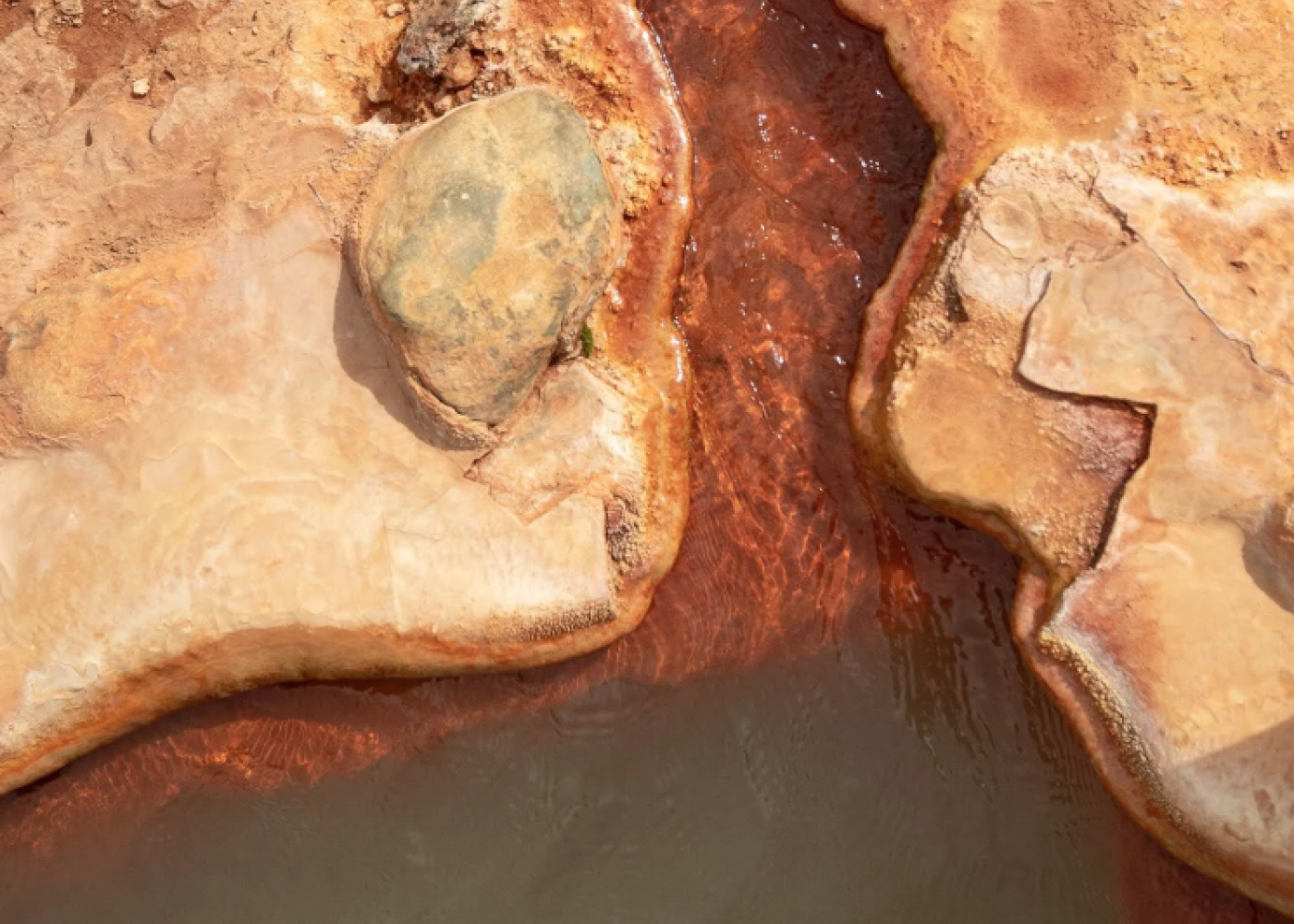
Picture of surface manifestation near Rico
THE OPPORTUNITY

Below Rico’s surface lies significant potential for energy independence. Artesian boreholes drilled decades ago reveal a hot water resource north of town, and recent investigation points to a second hydrothermal anomaly to the south. Geologic features indicate a substantial, untapped geothermal reservoir that could offer Rico energy resilience and greater economic agency.

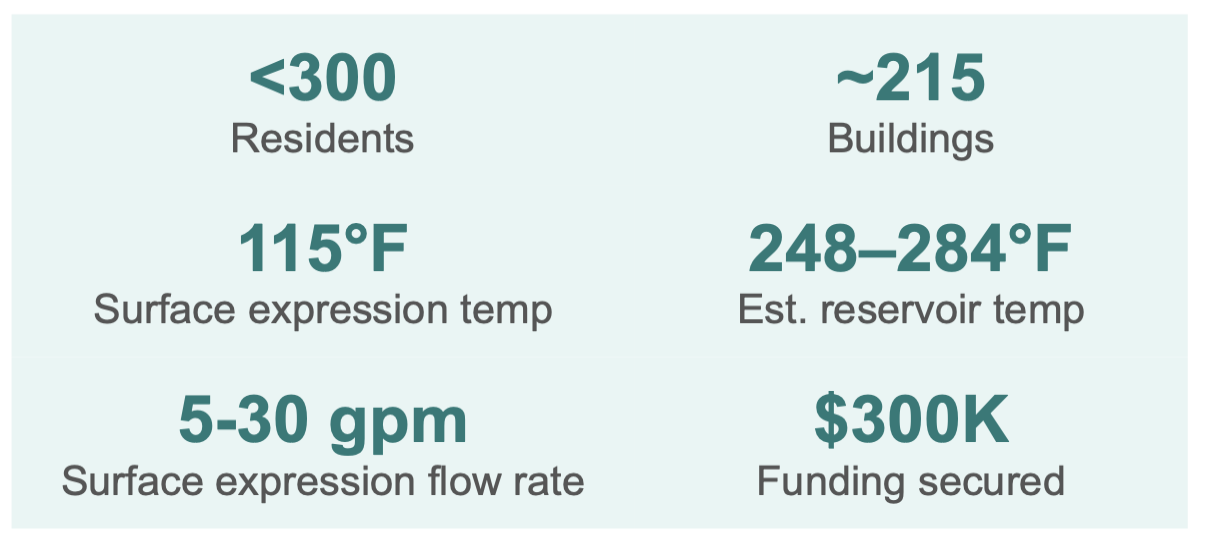
The Rico Geothermal Coalition (RGC), formed in 2022, is exploring Rico’s geothermal resource, researching feasibility of a district heating system that would use a thermal energy network (TEN) to heat the town’s homes and structures (~215 buildings). If this potential is realized, Rico would be the smallest Colorado town to implement such a system, providing a replicable model of community-led geothermal development.

PROGRESS TO DATE

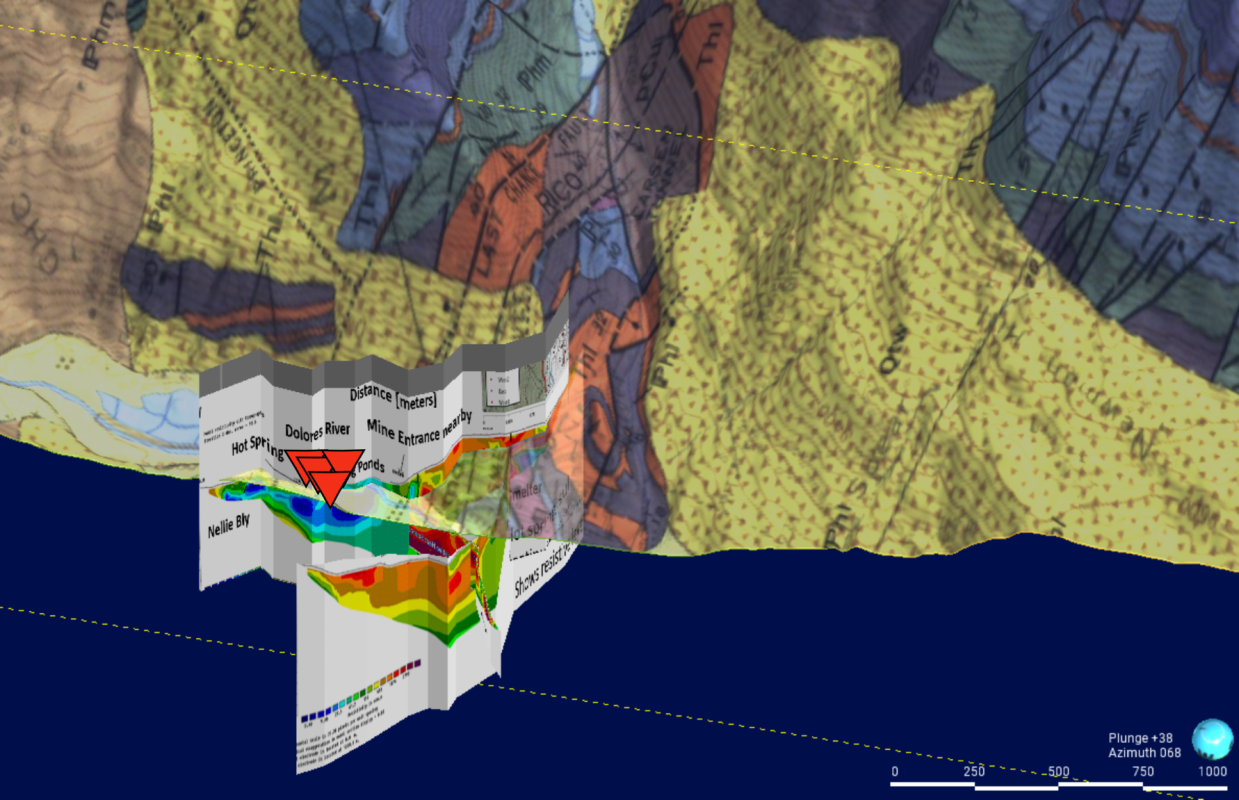
Phase 1 (2024): Funded by a $100K Colorado Energy Office grant, Teverra — a subsurface geoscience and engineering firm — built a 3D integrated model of Rico’s geothermal system synthesizing geology, temperature measurements, geophysical surveys, geochemical analysis, and historic observation.

Teverra developed two conceptual fluid-flow models, both targeting the natural porosity and fracture networks in two promising rock formations: the Leadville Limestone and the Hermosa Formation.

Phase 1 results confirmed these formations as viable reservoir candidates. This research will help RGC pinpoint a favorable location for a test well, reducing financial and technical risk.
Image
Teverra modeling of Rico site
Caption
Teverra’s modeling of Rico’s geothermal resource

Phase 2 (2025–ongoing): A $200K Colorado Energy Office grant funds the drilling of a monitoring well (80–350m depth) north of town and initial district heating network design. Drift Consulting Solutions will manage test well drilling, and the data collected will refine the model and inform next-phase construction decisions.
Image
Chart showing data for Rico exploration
COMMUNITY SUPPORT

A 2025 town-wide survey (30% participation) showed strong interest in geothermal development, contingent on cost and preserving Rico's character:
61% interested in geothermal heating for their home
71% favor geothermal for commercial & municipal buildings
77% support integrating geothermal w/other town excavation work
Nearly 60% of residents rely on propane as their primary heat source; 23% rely on wood. Over 30% report their heating system resiliency is questionable when Rico loses power.

VISION

A successful Phase 2 opens the path to a locally-sourced, community-owned energy asset. The project could eliminate dependence on imported propane, generate revenue through a heat-distribution model, support workforce development via new economic opportunity, and serve as a blueprint for rural geothermal initiatives.

FINANCIALS

Phase 1 was made possible by a $100K grant from Colorado Energy Office, which also provided $200K for Phase 2. Drilling and validating a monitoring well in alpine terrain is a capital-intensive undertaking. Phase 2 requires an additional $170K to complete. We are actively seeking funding for the next implementation phases- A comprehensive TEN system design, production well, district heating utility development and construction.

PARTNERS

Teverra LLC · Colorado Energy Office · Western Colorado University · Drift Consulting Solutions · Town of Rico · Clear Energy Economy for the Region (CLEER) · Bedrock LLC · San Miguel Power Association · EcoAction Partners ·Rico Land Collaborative · National Laboratory of the Rockies · Honest Architecture LLC
Quote
The characteristics of the Rico geothermal system are well aligned with the requirements of a community-scale Thermal Energy Network. TEN systems prioritize moderate temperatures, reliability, and distributed heat extraction — making them particularly suitable for low- to medium-temperature geothermal resources.
Attribution
Daniel Alonso Torres, Principal Geoscientist, Teverra LLC
Rico, Colorado is a historic mountain town of fewer than 300 residents, perched at 8,827 feet in the San Juan Mountains. Incorporated in 1879 as a silver mining hub, even today, Rico lacks natural gas infrastructure. Residents rely almost entirely on propane and wood for heat, and a single power line subject to frequent outages delivers electricity to the town
Authors
Erin Leosz

How Proven Drilling Technologies Supported Fervo’s Hottest Geothermal Well

Submitted by bschmidt on Sep 17, 2026
  • Read more about How Proven Drilling Technologies Supported Fervo’s Hottest Geothermal Well
Date
Sep 23, 2026
Geothermal Rising
Geothermal Community
Download PDF
Image
NOV Member Focus graphic
Proven drilling technologies help unlock the next generation of geothermal energy

Enhanced geothermal systems (EGSs) are rapidly emerging as one of the most promising sources of reliable, carbon-free baseload power. Unlike solar and wind, EGS resources can generate electricity continuously, providing a dependable complement to intermittent renewable energy sources.

And unlike conventional hydrothermal projects that rely on naturally occurring heat, fluids, and permeability, enhanced geothermal systems create engineered reservoirs in hot, low-permeability rock. Wells are drilled into deep formations, where stimulation techniques establish pathways for circulating fluid that transport heat back to the surface for electricity generation. Because EGS is not limited to naturally productive geothermal reservoirs, it significantly expands where geothermal energy can be developed.

But this promise comes with pitfalls, thanks to the extreme demands EGS plays place on drilling and completion tools. Most EGS projects target hard, abrasive formations several kilometers below the surface, where temperatures routinely exceed 150°C (302°F) and can approach or surpass 300°C (572°F). These environments accelerate equipment wear and increase mechanical loading on bits, bottomhole assemblies, and surface equipment. In many cases, naturally fractured intervals can also cause circulation losses, complicating fluid management and drilling efficiency.

To address these challenges, the geothermal industry is drawing on technologies and expertise developed over decades in oil and gas. NOV is adapting proven drilling systems, digital technologies, and well construction solutions to meet the demands of deeper, hotter geothermal environments and improve drilling performance while reducing risk and cost.

This approach was central to Fervo Energy’s recent appraisal campaign at Project Blanford in Millard County, Utah. Working alongside Fervo, NOV supplied a suite of drilling technologies that helped execute one of the industry’s most technically demanding geothermal drilling programs to date. The following sections review these technologies and how they supported Fervo’s delivery of the hottest geothermal well in the company's history.

Quote
Project Blanford was the perfect proving grounds for adapting proven drilling technologies to help improve efficiency, reduce operational risks, and accelerate the commercialization of enhanced geothermal systems.
Attribution
Chuck Wright, NOV Corporate R&D Manager
Maintaining visibility in extreme drilling environments

At Project Blanford, having continuous access to downhole conditions was essential as the drilling operation progressed into deeper, hotter, and more challenging formation conditions.

NOV’s RigSense™ 4.0 electronic data recorder (EDR) served as the central platform for collecting and visualizing drilling data, continuously capturing key operational parameters including weight on bit, torque, rotary speed, rate of penetration, standpipe pressure, pump rates, and flow volumes.

Together, these measurements provided drilling personnel with a comprehensive picture of mechanical loading and hydraulic performance, allowing teams to identify changing formation responses, optimize drilling parameters, and manage equipment stress as conditions evolved.

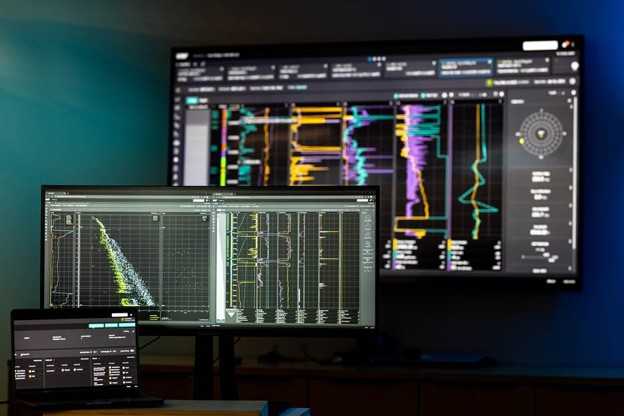
The system also created a common operating picture across the rig while supporting collaboration between field and office-based personnel. Integrated with NOV's WellData™ 4.0 information system, drilling data was transmitted in real time to engineering and operations teams located away from the wellsite, enabling technical specialists to evaluate drilling performance using the same information available to rig crews.

Image
The WellData 4.0 information system
Caption
The WellData 4.0 information system gives remotely located technical specialists the same real-time access to drilling data as the rig crew, enabling more effective collaboration and improved decision-making.

This shared visibility allowed for faster decision-making as drilling conditions changed—a capability that becomes increasingly valuable as geothermal wells push into deeper, hotter reservoirs where operating margins can narrow rapidly.

Managing fluids for reliable drilling performance

Fluid management was equally important throughout the drilling campaign. Beyond transporting cuttings to the surface, drilling fluids were also essential to maintaining wellbore stability, supporting hydraulic efficiency, and assisting in cooling drilling components in the bottomhole assembly.

NOV’s pit volume totalizer (PVT) system continuously monitored pit volumes, inflow and outflow rates, and overall fluid behavior during drilling. By providing early indications of fluid gains or losses, the system helped crews quickly identify changing downhole conditions and circulation losses commonly associated with natural formation fractures.

Maintaining continuous awareness of drilling hydraulics and fluid performance provided another layer of operational confidence as the appraisal well advanced toward its target depth.

Engineering drilling technologies for hard, high-temperature rock

While digital systems improved operational awareness, drilling performance ultimately relied on equipment capable of withstanding the demanding geothermal environment.

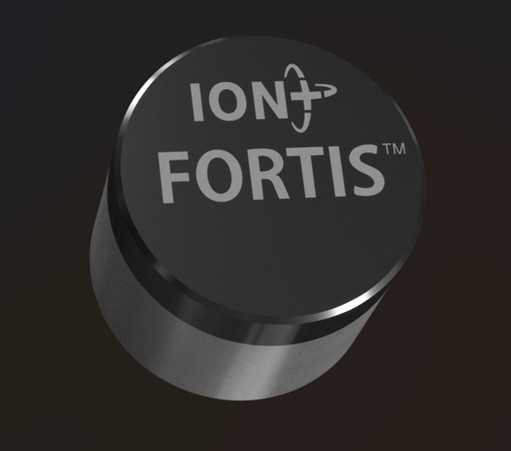
Before drilling began, NOV worked with Fervo's drilling team to evaluate anticipated formation characteristics and operational objectives for the well. Based on those discussions, NOV supplied drill bits equipped with its ION+™ Fortis™ polycrystalline diamond compact (PDC) cutter technology for the intermediate and production hole sections.

Image
The ION+ Fortis PDC cutter
Caption
The ION+ Fortis PDC cutter is designed for durability, improved tangential strength, enhanced thermal stability, and reduced flexing and cracking—resulting in higher ROPs in long-lateral, high-temperature intervals.

Originally designed for durability in the mechanically demanding, interbedded formations encountered in unconventional oil and gas wells, the ION+ Fortis’s hybrid impact- and abrasion-resistant cutter design combines impact resistance with abrasion resistance—an advantage when drilling hard, heterogeneous geothermal formations.

For Project Blanford, the bit design was further optimized with enhanced cutter technologies, modified blade geometries, and hydraulic improvements that increased cutter cooling and debris evacuation. These engineering modifications helped reduce mechanical loading while preserving cutter durability at elevated temperatures.

Extending bit life is particularly valuable in geothermal drilling, where every trip out of the hole adds time, cost, and additional thermal cycling for drilling equipment. Maximizing footage drilled per bit directly contributes to improved project economics.

Field performance demonstrated the effectiveness of the optimized bit. The PDC bits delivered higher penetration rates, longer run lengths and bit life, and consistent drilling performance throughout much of the well. A single 12¼-in. bit drilled an entire 1,825-m (5,988-ft) intermediate interval in one run. In total, NOV PDC bits drilled approximately 78% of well footage.

Efficient solids control supports drilling efficiency

Hard-rock geothermal drilling also generates large volumes of abrasive cuttings that must be removed continuously to maintain drilling fluid properties, protect downstream equipment, and support consistent hydraulic performance.

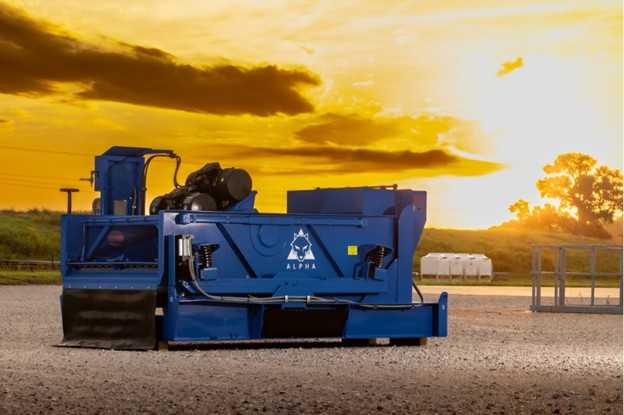
NOV Alpha™ shakers served as the primary solids-control stage at Project Blanford. Their 7G+ linear-motion design and optimized fluid handling capability enabled efficient processing of high drilling fluid volumes to maximize cuttings dryness and preserve valuable drilling fluid.

Image
The Alpha shaker
Caption
The Alpha shaker is designed for optimally enhanced linear motion to process more fluid at higher rates, deliver drier cuttings, and reduce operational drilling costs.

Alpha’s design also incorporated an optimized vibration system that enabled the shaker to operate significantly quieter than conventional systems, fostering safer working conditions for rig personnel while maintaining solids-processing performance.

Demonstrating what's possible for next-generation geothermal

Together, NOV’s real-time drilling intelligence, optimized drilling tools, and solids-control systems provided an integrated solution for maintaining drilling performance in one of the industry’s most demanding environments.

Fervo drilled the vertical appraisal well to approximately 3.4 km (11,200 ft), where measured temperatures exceeded 290°C (555°F)—well above the threshold required for commercial geothermal development. According to the company, the well was drilled in fewer than 11 days and established the hottest geothermal well in Fervo's history while confirming an ultra-high-temperature resource capable of supporting planned multi-gigawatt development.

As enhanced geothermal systems continue moving from demonstration projects toward commercial deployment, the combination of proven drilling expertise and purpose-built innovation will become increasingly important. Project Blanford provides a compelling example of how transferring knowledge and technology across energy sectors can help unlock deeper, hotter geothermal resources and accelerate the delivery of reliable, carbon-free power at scale.

Quote
For NOV, Project Blanford reflects our strategy of applying decades of well construction experience to geothermal applications. Rather than developing new drilling systems from the ground up, we’re focused on adapting proven technologies for the unique thermal and mechanical demands of geothermal wells.
Attribution
Alexis Garcia, Director, NOV Geothermal
Member Focus: NOV applied proven drilling, digital, fluid-management, and solids-control technologies during Fervo Energy’s Project Blanford appraisal campaign in Utah. The 3.4-km well reached temperatures exceeding 290°C and was drilled in fewer than 11 days, while a single NOV PDC bit drilled the entire 1,825-m intermediate interval in one run. This article explores how adapting established oil and gas technologies for extreme geothermal conditions can improve drilling performance, reduce operational risk, and help accelerate commercial-scale enhanced geothermal development.

Breaking the Depth Barrier with Millimeter-Wave Drilling and the First Superhot Geothermal Power Plant

Submitted by bschmidt on Aug 18, 2026
  • Read more about Breaking the Depth Barrier with Millimeter-Wave Drilling and the First Superhot Geothermal Power Plant
Date
Aug 19, 2026
Geothermal Community
Geothermal Rising
Download PDF
Image
Member focus graphic (Quaise)
The ceiling that kept geothermal small

Conventional geothermal development typically reaches depths of about two kilometers and temperatures around 200°C. At those conditions, wells produce useful heat and power, but output per well remains modest relative to the thermal resource below. Enhanced geothermal systems have begun pushing into hotter, tighter formations, yet the fundamental constraint remains: rotating drill bits, motors, and downhole electronics degrade rapidly as temperatures climb past 200–250°C.

The result is an industry that contributes less than one percent of global electricity despite sitting atop a resource that dwarfs demand. The U.S. Department of Energy has set a target to increase geothermal power production twenty-fold by 2035 through EGS. Even that ambitious goal only begins to close the gap between what is technically accessible today and what exists at depth.

The deeper and hotter you go, the physics improve: higher enthalpy fluids, greater density contrasts between injection and production, and more efficient power conversion at the surface. What has been missing is a drilling system that can survive and perform economically under those conditions.

Image
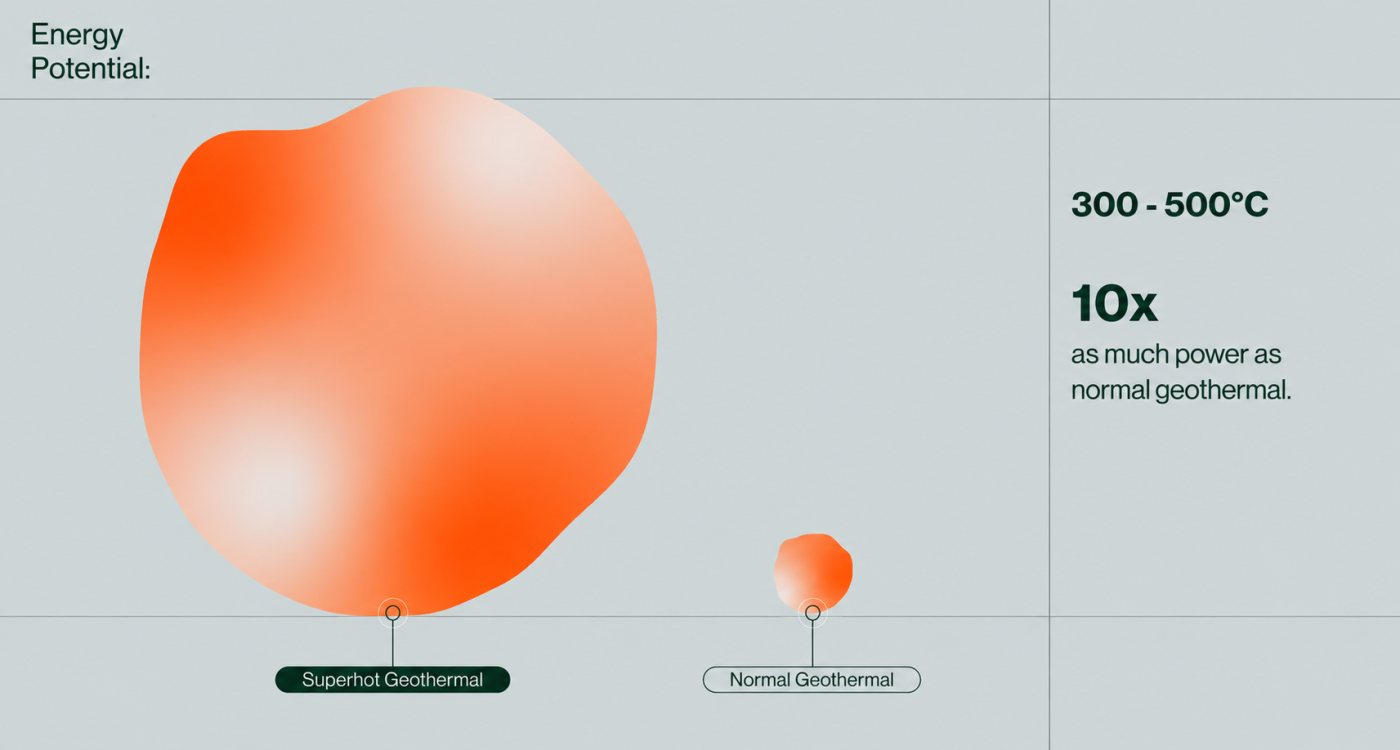
Quaise Energy's energy potential comparison
Caption
Quaise Energy's energy potential comparison showing superhot geothermal wells produce 10x the energy of conventional systems, fundamentally changing project economics and land use.
From fusion science to field-tested drilling

Millimeter-wave drilling originated in decades of gyrotron research at MIT, where high-power microwave sources were developed for plasma heating in fusion reactors. Quaise adapted that science into a drilling system: a surface-based gyrotron generates concentrated millimeter-wave energy, which is transmitted down a waveguide to the rock face with minimal energy loss.

At the bottom of the hole, the directed energy ablates rock through thermal spallation and vaporization rather than mechanical grinding. No rotating bit contacts the formation. Because the energy source sits at the surface, it is not exposed to downhole temperatures or pressures. Cuttings are removed by a pressurized purge gas system rather than heavy drilling mud, eliminating many of the circulation challenges that plague deep conventional wells.

The system has already penetrated more than 100 meters through granite in field conditions, proving the approach works in the crystalline basement lithologies where superhot rock is found. That milestone moved the technology from laboratory demonstration to field validation.

Depth isn’t an advantage; the superhot resource is.

Project Obsidian, first commercial superhot EGS

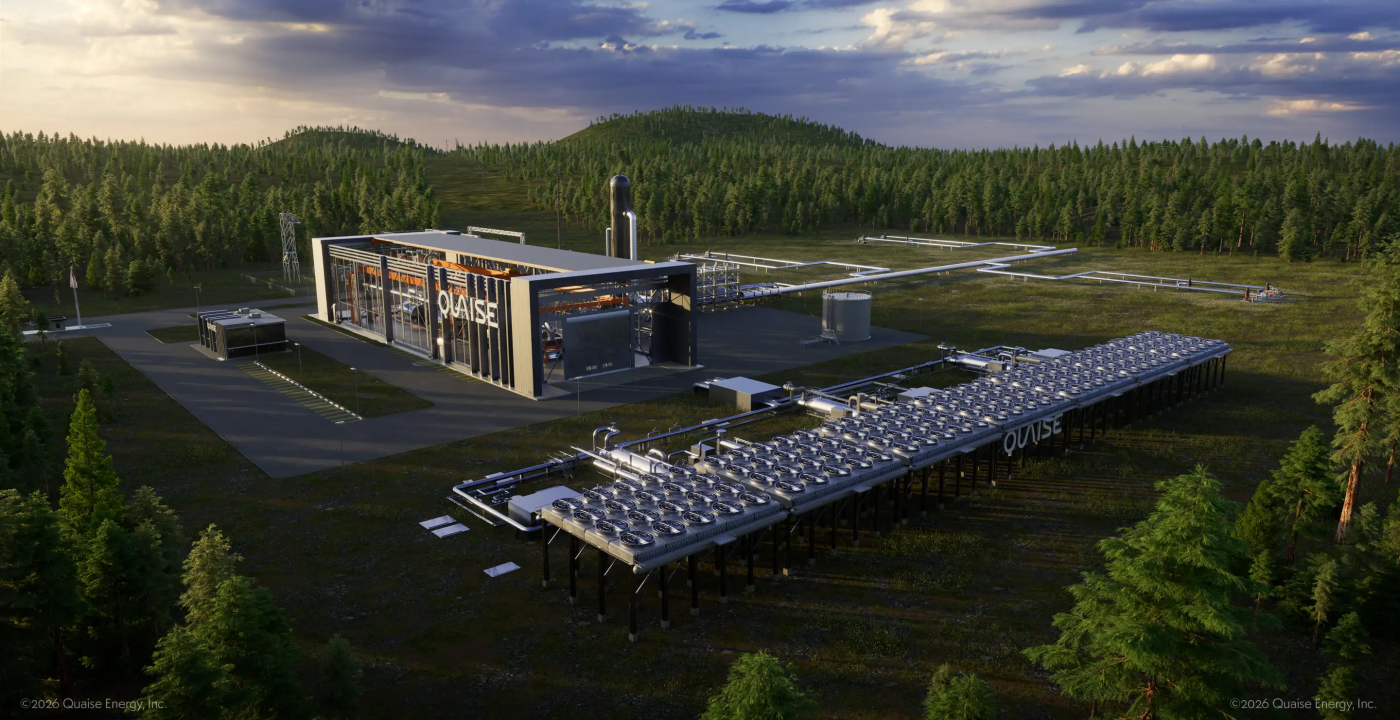
Project Obsidian, located in Central Oregon, will be the first commercial deployment of millimeter-wave drilling and the world's first superhot geothermal power plant designed from the outset to operate at 300–500°C.

The development follows a phased approach:

Phase I delivers 50 MW through a combination of conventional drilling for upper well sections and millimeter-wave drilling to reach superhot depths. Phase II expands the facility to 250 MW by accessing deeper, hotter rock below the initial wells, reaching temperatures up to approximately 450°C. Phase III targets 1+ GW as the site and technology mature.

The site was chosen as the best-studied, most economically viable location in the United States to prove superhot geothermal at scale. Quaise has secured land leases and commercial offtake agreements, with first power targeted by 2030.

Surface facilities will use high-efficiency turbines operating at the highest available capacity factors for geothermal, delivering firm baseload power with zero fuel, zero waste, and zero emissions. The compact footprint means less land disturbance per megawatt than any other thermal generation technology.

Image
Rendering of the Project Obsidian facility in Central Oregon
Caption
Rendering of the Project Obsidian facility in Central Oregon, surrounded by native forest showing the compact surface footprint of a superhot geothermal power plant to deliver 50 MW in Phase I with zero fuel, waste, and emissions, scaling to 250 MW and 1+ GW in subsequent phases.
Why superhot production changes the economics

At 300–500°C, water enters a supercritical or near-supercritical state with properties that transform well productivity. The working fluid exhibits gas-like viscosities (enabling easy flow through engineered fracture networks), liquid-like densities (maximizing heat transport per unit volume), and extreme density contrasts between injection and production wells (minimizing parasitic pumping loads).

The combined effect is 5–10 times as much electricity per well as conventional geothermal, and potentially up to 100 times as much as low-temperature systems. Higher temperatures also mean higher Carnot efficiency in the turbine, so a greater fraction of the extracted heat is converted to electricity.

Crucially, the geochemistry in a superhot engineered reservoir is controlled rather than inherited. Water chemistry is managed to prevent scaling and corrosion, sustaining decades of peak heat transfer. Working in deeper, tighter formations also reduces water losses compared to shallower fractured systems.

Quote
Thermodynamics reward you exponentially when you move from 200°C to 400°C. You are not getting twice the power; a single superhot well replaces five to ten conventional wells. That changes everything about project economics, land use, and speed to capacity.
Looking Ahead

Project Obsidian is designed as a proof point, not an endpoint. Quaise's tiered development roadmap starts in areas with the highest geothermal gradients (Tier I sites such as Central Oregon), then scales to Tier II and Tier III locations where superhot rock occurs at greater depths. Millimeter-wave drilling's independence from downhole temperature makes those deeper targets accessible without an exponential cost escalation.

The long-term implication is geographic: superhot geothermal could expand east of the Cascadia volcanic arc, east of the Mississippi, and beyond the global Ring of Fire, potentially bringing firm clean power within reach of more than 90 percent of the world's population. That is a fundamentally different value proposition than conventional geothermal's dependence on rare volcanic hotspots.

Quaise is also investing in regional partnerships, including collaboration with Oregon State University's Experimental Deep Geothermal Energy (EDGE) lab, to characterize subsurface conditions common to superhot systems and build a knowledge base that benefits the broader industry.

Takeaway for the Geothermal Community

The transition from mechanical to directed-energy drilling represents more than an incremental improvement. It removes the temperature ceiling that has defined geothermal's scale for decades. Project Obsidian will test whether that removal translates into the economic and operational advantages predicted by the physics.

Three implications for the wider community:

  1. Superhot conditions improve every variable that matters: power per well, conversion efficiency, land intensity, and long-run cost. If the physics hold at commercial scale, geothermal competes directly with fossil baseload on economics, not just emissions.
  2. Drilling technology is the bottleneck, not the resource. The thermal energy below three kilometers is effectively unlimited. Systems that can reach it affordably redefine geothermal from a geography-constrained niche to a universal energy source.
  3. First-mover projects like Obsidian will generate operational data that the entire industry needs. Performance data from superhot wells, millimeter-wave penetration rates, and long-term reservoir behavior at supercritical conditions will inform EGS design worldwide.

If Project Obsidian delivers on its phased targets, the geothermal industry's conversation shifts from how to expand incrementally to how fast it can scale.

Member Focus: Geothermal power has always been limited by how deep and how hot conventional tools can go. For decades, the industry has operated within a temperature ceiling set by mechanical drill bits, restricting commercial development to moderate-depth hydrothermal reservoirs and leaving more than 99 percent of Earth's thermal energy untapped. Quaise Energy's millimeter-wave drilling system, developed from over a decade of fusion science research at MIT, removes the mechanical constraint entirely by using high-frequency electromagnetic energy to ablate rock without contact. Project Obsidian in Central Oregon will be the technology's first commercial deployment, targeting superhot conditions of 300–500°C where each well can deliver 5–10 times the electricity of conventional geothermal systems. This article examines how the transition from mechanical to directed-energy drilling could redefine the scale, geography, and economics of geothermal power.

Advancing with the Heat in Geothermal Drilling Fluids

Submitted by bschmidt on Jul 23, 2026
  • Read more about Advancing with the Heat in Geothermal Drilling Fluids
Date
Jul 23, 2026
Geothermal Rising
Geothermal Community
Download PDF
Image
GR/Sinclair blog graphic
From early hydrothermal to today’s frontier wells

When commercial geothermal projects accelerated in the late 1970s and 1980s, most development focused on high-permeability hydrothermal reservoirs. Wells were hot and sometimes sour, but depths were moderate, and bottom-hole temperatures, while challenging, sat within the performance envelope of many oil and gas drilling fluids.

Sinclair entered the market during this period with a specific focus on geothermal drilling fluids. Unlike generalist service companies that shifted in and out of geothermal as commodity cycles changed, Sinclair built its business almost entirely around high-temperature, high-enthalpy projects. Over time, that narrow focus became an advantage. The company accumulated a library of mud reports, treatment records, and loss-control case histories across dozens of fields.

As developers drilled deeper and chased hotter rock, early fluid systems began to show their limits:

  • Standard polymers lost viscosity at elevated temperatures.
  • Conventional lost-circulation materials struggled in wide, thermally stressed fractures.
  • Wellbore stability became harder to maintain in crystalline rock and highly fractured formations.

These challenges pushed geothermal fluids away from simple adaptations of oil and gas systems toward purpose-built formulations for high-temperature and extreme-loss environments.

Building fluids for higher temperatures and fractured rock

The first major shift came with the adoption of synthetic, high-temperature polymer systems designed to retain rheology after prolonged exposure to elevated bottom-hole temperatures and repeated circulation cycles.

Image
Geothermal mud engineers monitor rheology and losses
Caption
Geothermal mud engineers monitor rheology and losses in real time, tuning high-temperature drilling fluids to evolving downhole conditions.

Sinclair and other geothermal specialists began to:

  • Qualify polymers in autoclave tests that approximate downhole conditions rather than relying solely on surface-temperature properties.
  • Combine temperature-stable polymers with carefully chosen weighting agents to maintain density without compromising rheology or filtration.
  • Use brine-based or mixed-salt systems aligned with reservoir chemistry to reduce scaling and minimize damage.

At the same time, lost circulation was becoming a defining issue, especially as wells entered naturally fractured formations and the crystalline basement. Severe losses could consume large volumes of fluid, add cost, and increase nonproductive time.

The response included:

  • Engineered blends of granular, fibrous, and flake materials tailored to specific fracture apertures.
  • Staged lost-circulation “ladders,” where pills were designed with increasing particle size ranges to bridge a wider spectrum of loss pathways.
  • Close coordination between fluid design and cementing plans to ensure that remedial squeezes and isolation jobs would remain compatible with the drilling fluid system.

In many fields, these approaches enabled operators to drill intervals that had previously required repeated sidetracks or lengthy cure periods.

Lessons from FORGE in Milford, Utah

The U.S. Department of Energy’s Frontier Observatory for Research in Geothermal Energy (FORGE) site in Milford, Utah, marked a significant turning point in geothermal drilling practice. Instead of targeting a naturally productive hydrothermal reservoir, FORGE focused on creating and characterizing an engineered reservoir in hot, low-permeability crystalline rock.

Sinclair served as the dedicated provider of geothermal drilling fluids for the FORGE wells. The project demanded a combination of temperature performance, low formation damage, and robust loss-control capability in granite and other crystalline lithologies.

Image
Drilling at the FORGE site in Milford, Utah
Caption
Drilling at the FORGE site in Milford, Utah, where high-temperature fluid systems and planned lost-circulation strategies were tested in crystalline basement rock.

Several key lessons emerged.

Temperature margin as a design requirement

Bottom-hole temperatures and circulating times at FORGE pushed fluid formulations close to their limits. Lab screening focused on polymers and fluid-loss additives that could withstand exposure to elevated temperatures for extended periods without severe thinning or breakdown. Operationally, this allowed crews to maintain hole cleaning during long static periods for data acquisition or stimulation work. 

Lost circulation as a design condition

In crystalline basement, natural fractures are common and often intersect at high-pressure differentials. Rather than treating every loss as an unforeseen challenge, the FORGE program incorporated pre-planned loss-control strategies. Sinclair deployed staged treatments and customized blends based on field diagnostics, helping to maintain sufficient hydrostatic head while limiting total fluid losses.

Quote
In EGS and superhot rock, lost circulation is not an accident; it is a design condition that has to be planned for from the very first well.
Attribution
Christian Heriard – Senior Drilling Fluids Engineer

Data continuity and iterative improvement

Because the same fluids team supported multiple wells and phases, treatment records, return volumes, and condition monitoring from early operations could feed directly into later wells. That continuity shortened learning cycles and improved confidence in how the systems would behave as the project advanced.

The systems and practices proven at FORGE are now informing drilling-fluid design for a growing set of commercial EGS ventures and technology spin-outs that trace their origins to the Milford program.

Extending experience to EGS and superhot rock

As EGS and SHR concepts move from pilot projects toward larger developments, drilling fluids face an even steeper set of requirements. Wells may target hotter rock, tighter formations, or both. Some SHR designs anticipate conditions where circulating fluids will be exposed to supercritical or near-supercritical environments.

Drawing on FORGE and earlier international work, Sinclair has focused on three broad themes for these next-generation wells.

Temperature survival beyond conventional limits 

Fluid systems are screened for both short- and long-term thermal stability, including heating and cooling cycles as operations move between drilling, conditioning, and stimulation. High-temperature polymers, stabilizers, and carefully chosen base fluids are combined to maintain rheology while minimizing degradation products that could plug fractures or damage tools. 

Wellbore integrity in engineered reservoirs

EGS and SHR wells rely heavily on long-term integrity of the wellbore and the near-wellbore region. Drilling-fluid design is coordinated with cement systems and with anticipated stimulation treatments. The goal is to maintain borehole support while limiting chemical interactions that might weaken cement or alter fracture geometry in unintended ways.

Quote
Geothermal drilling does not stand still. The rock keeps getting hotter, and the wells keep getting more complex. The only way to stay ahead is to treat fluids as an evolving technology, not a fixed recipe.
Attribution
Ron Tate – Vice President, Geothermal & Oil and Gas

Lost-circulation strategies for extreme conditions

Severe, total, and cyclic losses are expected rather than exceptional in many EGS and SHR settings. Engineered lost-circulation designs for crystalline rock are being adapted to anticipated fracture networks in new project areas, including regions under evaluation in Oregon and other western U.S. states. Emphasis is placed on materials that remain stable at high temperatures and do not compromise future stimulation or production.

Across these themes, much of the value lies not in any single product but in the accumulation of field experience and lab data that allows fluid systems to be tuned for each new prospect.

Why long-term specialization matters

Service participation in geothermal has often mirrored commodity cycles in oil and gas. When oil prices are high, many providers are fully occupied; when prices fall, geothermal suddenly looks attractive again. The result can be an intermittent presence, making it hard to sustain specialized expertise.

Sinclair’s business model has been different. With geothermal drilling fluids as a central focus since the 1970s, the company has remained active through multiple market cycles. That continuity has practical consequences:

  • Historical mud data and performance records are available when operators return to a field after many years.
  • Lessons learned in one campaign can be carried forward to subsequent wells rather than being relearned from scratch.
  • Research investments in polymers, loss-control blends, and high-temperature testing feed directly into live projects instead of being shelved between cycles.

For developers planning multi-well EGS or SHR campaigns, long-term technical partners in drilling fluids and other critical services can be as important as the rig or the drilling program itself.

Takeaway for the Geothermal Community

The story of geothermal drilling fluids over the past four decades is a story of steady adaptation to higher temperatures, more fractured formations, and engineered reservoirs. 

Sinclair’s work from early hydrothermal projects through FORGE and into emerging EGS and SHR efforts illustrates several principles the wider community can apply:

  • Design fluids for the end state, not just the first well. Anticipate how temperature, chemistry, and losses will evolve across a campaign.
  • Treat high temperatures and severe losses as design conditions. Build strategies and testing protocols around them, rather than reacting only when problems arise.
  • Value continuity of expertise. Long-term specialty providers can shorten learning curves and reduce both technical and financial risk for ambitious new projects.

As geothermal developers aim for scalable EGS and superhot rock assets, drilling-fluid innovation will remain one of the quiet but essential enablers. The wells that unlock the next generation of geothermal resources will depend as much on what circulates inside the hole as on the rock they reach.

Member Focus: Geothermal wells have marched steadily into hotter, deeper, and more complex geologies. Along the way, drilling fluids have evolved and advanced, from conventional hydrothermal recipes into systems capable of withstanding the conditions of enhanced geothermal systems (EGS) and superhot rock (SHR). This article traces the technical progression of geothermal drilling fluids over four decades of fieldwork by Sinclair, from early hydrothermal projects to FORGE and emerging EGS and SHR campaigns, highlighting lessons in temperature tolerance, lost-circulation control, and wellbore stability that can help shape the next generation of geothermal wells.

Geothermal Discovery Day: Engaging the Next Generation at GRC

Submitted by bschmidt on Jul 09, 2026
  • Read more about Geothermal Discovery Day: Engaging the Next Generation at GRC
Date
Jul 09, 2026
Geothermal Community
Geothermal Rising
Image
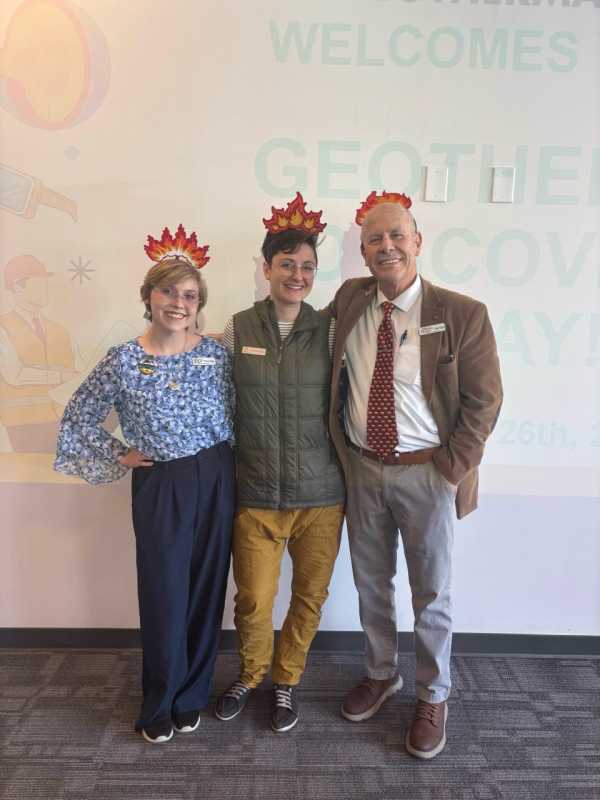
Group photo taken at Geothermal Discovery Day, 2025

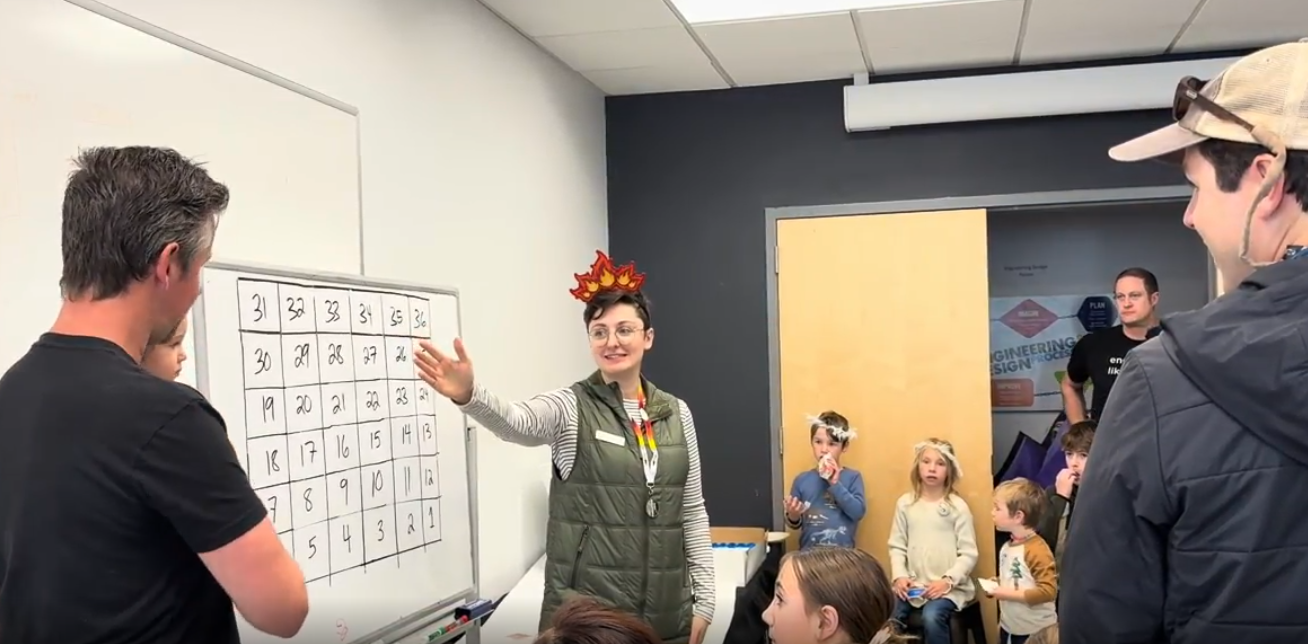
The future of the geothermal industry relies on raising community awareness and reaching the next generation of thinkers and doers. At the 2025 Geothermal Rising Conference (GRC) in Reno, Nevada, the workforce success committee successfully opened its doors, at no cost, to the public for "Geothermal Discovery Day," a gathering full of scientific exploration. We were ecstatic to welcome the 127 local community members and GRC affiliated folks who attended this wonderful event, many of whom were children who joined us without any previous education on geothermal.

The event kicked off at The Discovery Museum, offering a pizza party, during which the attendees received a quick, simple introduction to geothermal and why it matters. Families had free copies of “The Happy House” and coloring pages at their tables, and we were able to see the organic enthusiasm growing as they began to see the value of using the earth to save the earth. Including art and play in STEM learning makes it more accessible for youngsters, and this was a main theme for the day.

Image
Amelia Letvin welcomes attendees to Geothermal Discovery Day
Caption
Amelia Letvin welcomes attendees to Geothermal Discovery Day

Following the pizza party, we hosted live science demonstrations, including one called “Drilling for Geothermal Cake,” led by Rochelle Longval which utilized a sheet cake that had been divided into a grid with frosting. The young attendees used clues to determine where to drill into the cake to find geothermal (symbolized by red velvet), which demonstrated the step-by-step process that goes into a geothermal project from conception to completion. After plenty of fun and some delicious cake, the kiddos were given full access to the museum's exhibits.

Image
Rochelle Longval presents “Drilling for Geothermal Cake”
Caption
Rochelle Longval presents “Drilling for Geothermal Cake”

Once we’d all had our fill of the museum’s many activities and exhibits, families migrated to the Downtown Reno Public Library for interactive reading and art sessions. Activities included a face painter, coloring stations, and a reading of the children's books The Happy House by Egg Geo, and Our Hidden Powers by Kristina Hagstrom Illievska and Gabriella Skog of Baseload Capital. The library also hosted a geothermal-themed scavenger hunt featuring characters from Our Hidden Powers alongside characters from Egg Geo's own children’s book, The Happy House. We were glad to provide these activity books to support the day's educational goals.

A great deal of work, planning, and passion went into Geothermal Discovery Day, but I can confidently say that it was done with joy and excitement from start to finish. There is a shift in focus within this industry; it’s no longer a concentrated push for educating the policy makers and adjacent industries, but also includes community members and the rising generations.

Image
Mimi Egg, Rochelle Longval, and Jay Egg

The 2025 Geothermal Rising Conference was a success in countless ways, but as a company focused on education, we were thrilled to be included in the Discovery Day event. We firmly believe that leading by example by making community activities and resources accessible, and we take practical steps toward demystifying geothermal technologies for our neighbors and communities.

Image
Egg Geo 2024

This blog post was brought to you by the GR Workforce Success Group, as part of an initiative to highlight community outreach success stories in the geothermal community. We are committed to fostering a collaborative community to create a brighter future for Earth and all its inhabitants. If you are interested in supporting Workforce Success, want to get involved, or have an idea for another blog post - reach out to Amelia Letvin at, amelia@geothermal.org 

Read more on the Workforce Success webpage: https://geothermal.org/our-impact/workforce-success 

For more information about attending this year's Geothermal Discovery Day, please see: https://geothermal.org/events/2026-geothermal-discovery-day

This inaugural event was held on October 26th, 2025. Join us on Sunday, September, 20, 2026 at the Children's Museum Houston for this year's event!
Authors
Mimi Egg

High-Power Turbines for the Next Wave of Binary Geothermal

Submitted by bschmidt on Jun 17, 2026
  • Read more about High-Power Turbines for the Next Wave of Binary Geothermal
Date
Jun 17, 2026
Geothermal Rising
Geothermal Community
Download PDF
Image
Exergy GR Member Graphic
Bigger binary plants, bigger flow problems

Binary plants based on the Organic Rankine Cycle use a closed organic working fluid to extract heat from geothermal brine and then reject that heat through air-cooled or water-cooled condensers. As unit sizes increase, designers raise the mass flow of the working fluid to move more heat through the cycle.

At the turbine, that choice appears as a volumetric-flow problem. Large plants can push flow at outlet conditions to levels that require a single radial outflow machine to have very wide passages, large casings, and long blades. When dimensions grow this way, efficiency and mechanical robustness become harder to maintain.

Many plants solve the problem by splitting the flow into two parallel turbines. That approach works, but each additional machine adds foundations, piping, valves, auxiliaries, and maintenance tasks. For large developments built from repeated modules, the extra complexity compounds.

Quote
High-flow is not only a thermodynamic challenge; it is also a mechanical one that affects turbine size, layout, and plant cost.
Attribution
Giorgia Ruffato, Turbine Engineer, Exergy International
Dual-flow radial outflow design

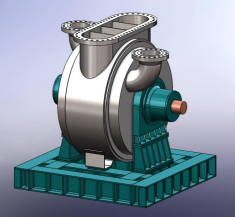
Exergy’s Gemini turbine concept retains the radial-outflow architecture but divides the flow path within a single body rather than using multiple separate machines.

The working fluid enters from two symmetric inlets. Each side feeds a mirrored set of stages mounted on a common rotor disk. The flow expands radially outward on both sides, then turns and exits toward a central exhaust. The rotor sits between bearings rather than in an overhung configuration, which improves stiffness and rotor dynamics for a machine of this size.

This layout roughly doubles the volumetric-flow capacity of a single turbine frame while targeting turbine isentropic efficiency above 90 percent. Instead of two smaller turbines, a plant can run one dual-flow machine on a single shaft, keeping the rest of the power island comparatively simple.

Image
3D image of Gemini turbine
Caption
3D section of the Gemini Turbine
Reference design for a 50 megawatt module

Exergy’s technical paper for the Geothermal Rising Conference uses a 50 megawatt binary plant as a reference case. The study represents a medium-enthalpy enhanced geothermal system with high brine flow and air cooling.

Brine enters the heat-exchange train at around 200 degrees Celsius and leaves at around 96 degrees before reinjection. Flow is on the order of 2,000 metric tons per hour. The working fluid is commercial n-butane, preheated and vaporized in shell-and-tube exchangers and slightly superheated before entering the turbine.

In this model, the Gemini turbine expands the working fluid through six stages and delivers slightly above 50 megawatts of mechanical power at the shaft. Gross electrical output at the generator sits around 50 megawatts, with net output just over 40 megawatts after auxiliary loads. Cycle efficiencies fall in the expected high-teens to low-twenties range for this temperature window.

An induced-draft air-cooled condenser closes the loop, allowing operation in areas where cooling water is constrained and keeping the geothermal fluid in a closed circuit from production to reinjection. The study team performed one-dimensional sizing, computational fluid dynamics simulations of the flow paths, and structural and rotor-dynamic checks. CFD results matched preliminary design values within a few percent. Stress and vibration analyses showed comfortable margins against yield and resonance for the modeled operating envelope.

Image
3D image of Gemini turbine
Caption
3D model of the Gemini Turbine
Binary technology in the field

Exergy’s current geothermal fleet already includes large binary units operating across different environments. The Gemini concept extends that family into higher-flow ranges, but the company’s installed base illustrates how binary technology is being used today.

Image
United Downs in the United Kingdom
Caption
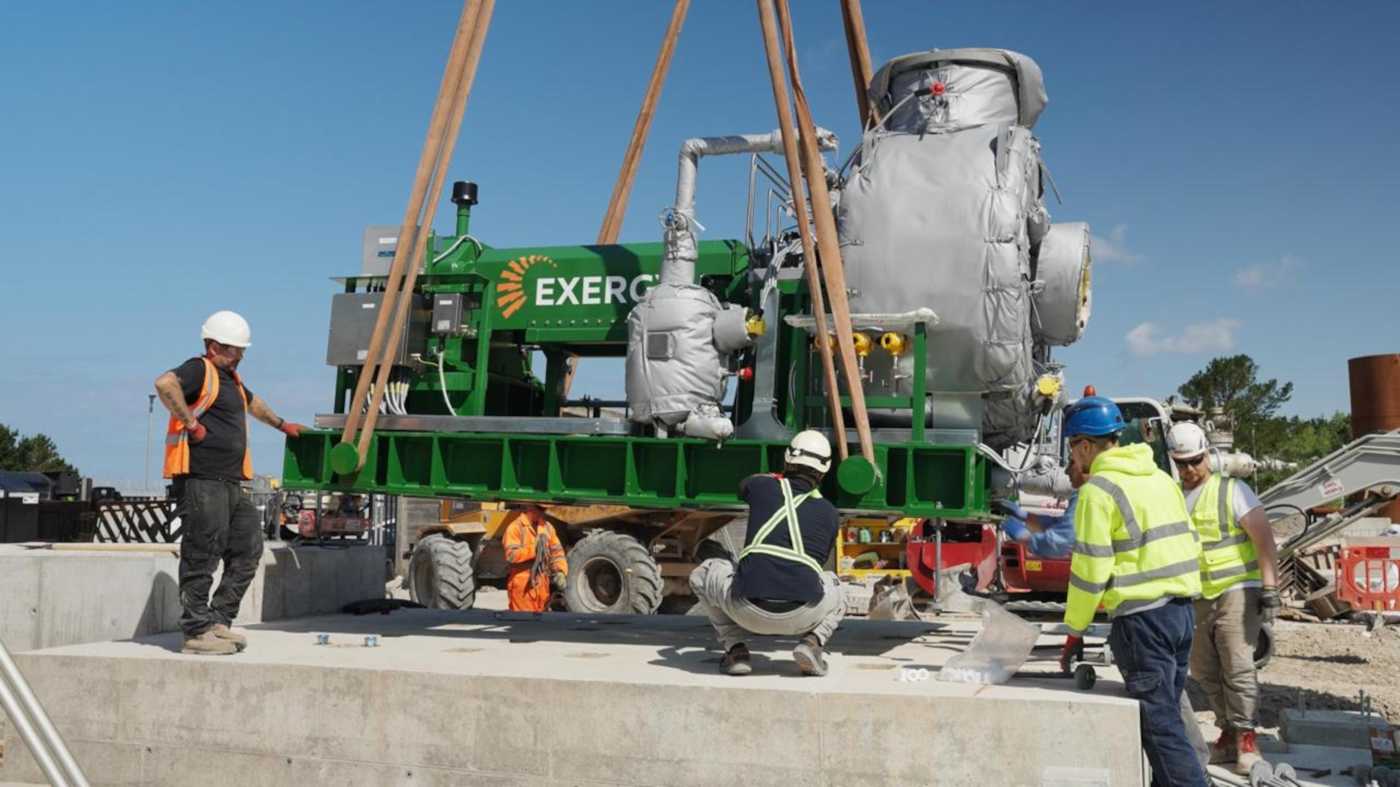
Radial Outflow Turbine onsite construction at United Downs in Cornwall
uses a binary plant to generate electricity and support lithium-extraction
operations from deep geothermal fluids.

At United Downs in the United Kingdom, a binary unit provides power from a deep well in Cornwall while also supporting a lithium extraction process using the produced fluids. The facility sits close to residential and industrial areas, so the surface plant must remain compact and quiet while delivering firm power from a new resource.

Image
Mahanagdong power plant
Caption
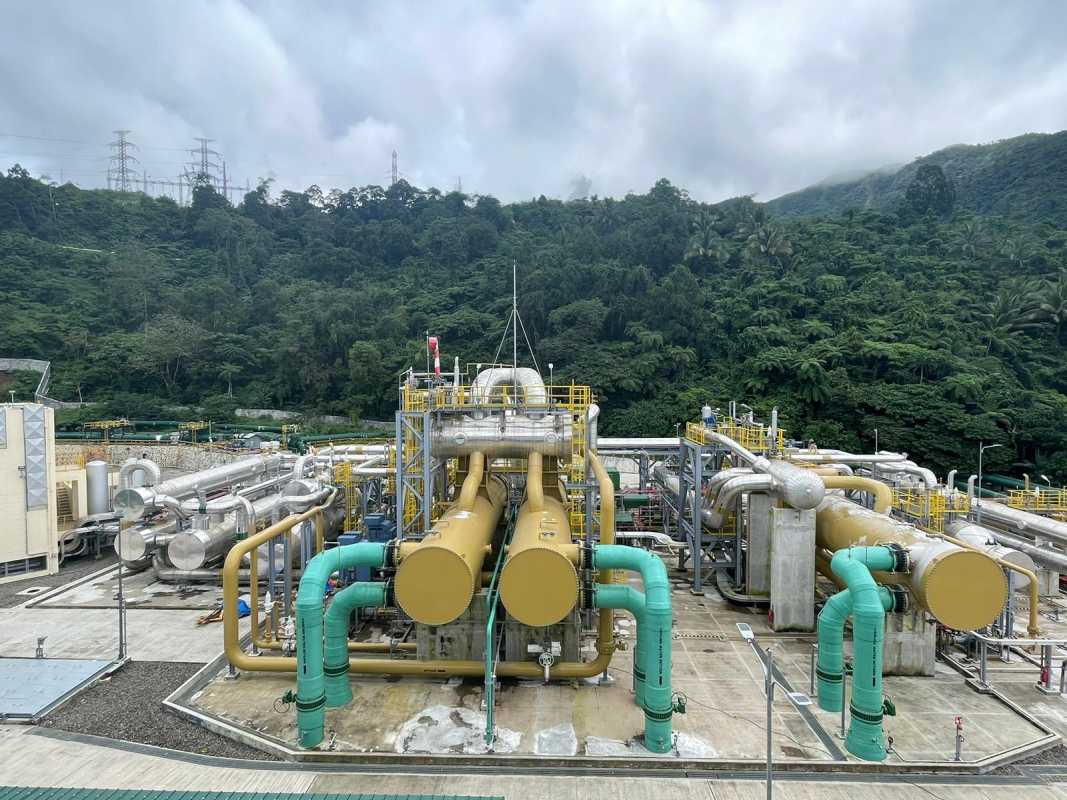
At Mahanagdong in the Philippines, a 24 megawatt binary unit adds
generation from lower-temperature brine at an existing geothermal field.

In the Philippines, a 24 megawatt binary unit at Mahanagdong uses lower-temperature brine from an established field to add generation without new high-enthalpy production. The plant operates in steep, forested terrain with heavy rainfall, which makes a compact, integrated power island valuable. Both projects use Exergy’s existing radial outflow turbines rather than the
new dual-flow design, yet they highlight a common theme. Binary systems are increasingly installed as flexible building blocks that work alongside existing fields, industrial processes, and new mineral-recovery schemes.

Implications for enhanced and advanced geothermal

Enhanced and advanced geothermal systems often target medium-enthalpy resources with high volumetric flow. Wells can be directionally drilled, stimulated, or configured as closed loops to create heat-exchange areas in rock that would not flow naturally. Surface systems must convert that steady flow into reliable power at competitive cost.

Binary plants already form the backbone of many of these concepts. The main question is how individual units can scale up without adding unnecessary complexity. High-flow radial outflow turbines provide one answer. A single dual-flow machine that can handle the working-fluid volume of a 50 to 60 megawatt module allows designers to:

  • Keep turbine layouts simple while increasing unit size.
  • Reduce the number of foundations, valves, and auxiliaries per module.
  • Maintain strong efficiency in a flow regime that would otherwise require multiple machines.

For developers and operators, turbine design becomes a front-end choice along with well architecture and brine chemistry. Matching turbine configuration to flow and temperature is part of de-risking large projects before the first well is drilled.

Quote
Advances that streamline plant design and raise module output offer developers real value: more power, easier project scaling, and improved economics.
Attribution
Luca Pozzoni, Deputy CEO and Group CFO
Takeaway for the developers and operators

Large binary geothermal units demand turbine designs that can manage very high volumetric flows while staying efficient and mechanically robust. Dual-flow radial outflow machines, such as Exergy’s Gemini concept, show that it is possible to increase unit size without multiplying the number of turbines.

As enhanced and advanced geothermal projects grow, success will depend on both the engineered reservoir underground and the power-conversion hardware at the surface. High-flow turbines are becoming a key part of that surface toolkit, turning more of the available heat into dependable megawatts while maintaining practical layouts for construction and operation.

Member Focus: Binary geothermal plants are scaling into the 30 to 60 megawatt range. Higher output means much higher working-fluid flow through the turbine, which can push conventional machines beyond their comfort zone. Exergy International’s Gemini concept shows one way turbine design is evolving to handle these flows in a single unit, simplify plant layouts, and support future Enhanced Geothermal Systems (EGS) and Advanced Geothermal Systems (AGS).

Solving Energy Poverty Through Geothermal Renaissance

Submitted by bschmidt on May 19, 2026
  • Read more about Solving Energy Poverty Through Geothermal Renaissance
Date
May 20, 2026
Geothermal Community
Geothermal Rising
Download PDF
Image
EggGeo Member Article Graphic
Energy poverty is still the real challenge

Energy poverty is often described as a problem somewhere else, in poorer countries or in remote communities far from modern infrastructure. In practice, it is much closer and much more common. It appears that anywhere households struggle to afford heating and cooling, public buildings face rising energy bills, and where energy insecurity narrows the choices available to families, schools, clinics, and local businesses.

That human reality matters because access to reliable energy affects more than comfort. It shapes health, educational attainment, workforce participation, and economic stability. When heating and cooling become unaffordable or unpredictable, communities absorb the cost in multiple ways.

Geothermal has a distinctive role in that conversation. Unlike intermittent resources, it can provide stable heat and power around the clock. Egg Geo’s perspective is that this reliability should be understood not only as an engineering achievement, but as a public benefit with direct implications for affordability and resilience.

Image
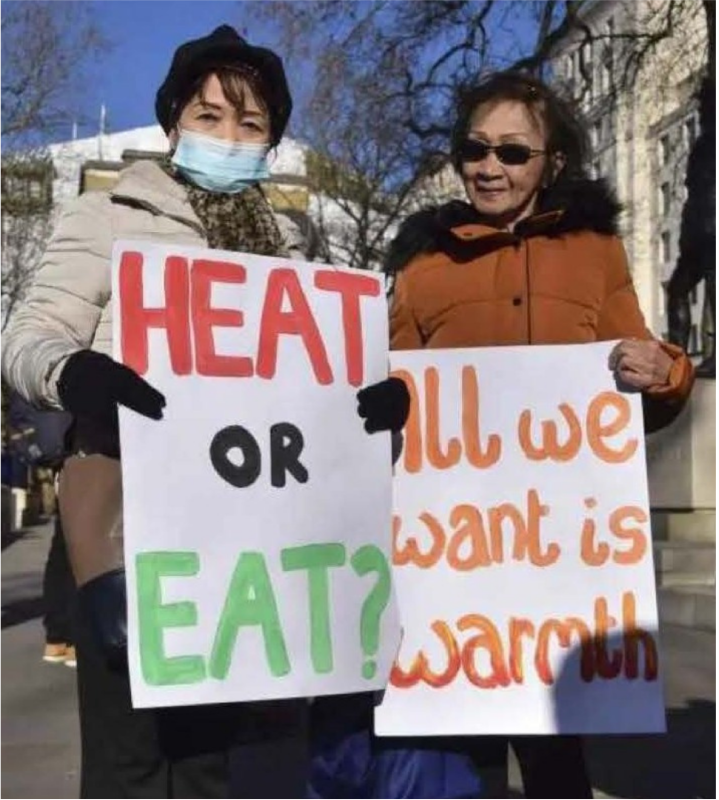
People protesting energy poverty
Caption
Energy poverty is not abstract. For many households, it shapes daily choices about warmth, food, health, and stability.

Framing geothermal this way expands the conversation. The value of geothermal is not limited to megawatts, gradients, or drilling performance. It also lies in its ability to stabilize access to an essential service. Clean, dependable thermal energy supports dignity, health, and continuity in ways that are easy to overlook when the industry focuses only on generation.

Quote
Reliable thermal energy is part of what makes health, dignity, and economic mobility possible.
Attribution
Jay Egg, President of Egg Geo
Thermal energy networks move the conversation closer to deployment

One of the most practical ways to translate that idea into the built environment is through thermal energy networks. These systems move thermal energy across buildings and districts, sharing heating and cooling loads in ways that can improve system efficiency and reduce long-term cost.

That matters because heating and cooling still receive less public attention than electricity, even though they represent a major share of energy demand. District-scale geothermal and networked thermal systems offer a way to address this gap directly by serving schools, housing, healthcare facilities, campuses, and commercial buildings with more stable and efficient heating and cooling.

Image
Thermal imaging of buildings
Caption
The geothermal renaissance will be measured by what we can actually build, train for, and deliver at scale.

The opportunity is larger than any one technology. In the United States, district geothermal heating remains comparatively limited, while other countries have built much larger thermal systems and achieved far greater average capacity per project. That gap suggests room for growth, especially if the sector can pair proven heat-pump and hydronic approaches with improved design tools, stronger deployment models, and more coordinated policy support.

Egg Geo points to several areas where innovation can help close that gap, including fifth-generation ambient loops, agentic AI design tools, and engineered geothermal systems. The underlying point is not novelty for novelty’s sake. It is that geothermal and thermal infrastructure needs to become easier to design, replicate, and integrate into real communities.

Technology does not scale without people

New infrastructure does not materialize because an idea is technically sound. It gets built because trained people know how to design it, install it, commission it, operate it, and maintain it over time.

That makes workforce development central to the geothermal story. If thermal energy networks and next-generation geothermal systems are to expand meaningfully, the sector needs a larger, more skilled labor base that includes drillers, pipefitters, planners, designers, control specialists, utility personnel, and local contractors.

Innovation in geothermal should not be separated from the physical reality of delivery. Technologies such as engineered geothermal systems, advanced heat-pump configurations, and ambient loops may open new opportunities, but they only matter at scale when people are trained to deploy them reliably.

The broader geothermal community already understands part of this challenge. Enhanced geothermal systems, for example, have benefited from knowledge spillover from oil and gas in drilling, well construction, and subsurface engineering. Thermal energy networks may require a similarly intentional effort to build capability across mechanical, civil, utility, and public-sector stakeholders.

Quote
The geothermal renaissance will be measured by what we can actually build, train for, and deliver at scale.
Attribution
Mimi Egg, Director of Marketing
Community turns momentum into infrastructure

No single firm can solve energy poverty, deploy district-scale thermal systems nationally, or establish geothermal as mainstream infrastructure on its own. Progress depends on connected institutions, shared learning, and a stronger ecosystem.

That is where Geothermal Rising and related convenings matter. Events such as the Geothermal Rising Conference and the Thermal Energy Networks Symposium create opportunities for developers, engineers, utilities, policymakers, workforce leaders, and community stakeholders to compare lessons and form deployable partnerships.

This is consistent with Geothermal Rising’s own broader goals around unifying the industry, strengthening community engagement and research, and building the systems needed for long-term growth. The value of those networks is practical. They help move geothermal from isolated pilots and niche demonstrations into repeatable models that can be financed, permitted, built, and maintained.

The ecosystem viewpoint on energy poverty is too large to be addressed with fragmented approaches. It requires alignment between technology providers, local governments, utilities, community advocates, and the workforce that will deliver the projects.

The geothermal renaissance has a human purpose

The clean-energy transition can sometimes become overly abstract, measured only in capacity targets or technology roadmaps. Geothermal has the chance to tell a fuller story. Its value is not just that it works underground, but that it can improve life above ground.

Reliable thermal energy can reduce exposure to volatile fuel costs, improve the resilience of housing and public buildings, and expand access to dependable heating and cooling in communities that need it most. That makes geothermal part of a larger public-interest story, not just a technical niche.

Linking four ideas that are too often separated: energy poverty, thermal energy networks, geothermal innovation, and workforce development. Treated together, they point to geothermal systems that are not only technically impressive but also socially meaningful.

Takeaway for the Geothermal Community

The geothermal renaissance will be stronger if it is tied to everyday outcomes rather than just technical ambition. Energy poverty, affordability, and resilience provide a clear test for whether the industry is solving problems that matter.

This article makes three practical points for the Geothermal Rising community:

  • Geothermal should be understood as a thermal infrastructure opportunity, not only an electricity story
  • Thermal energy networks can help translate geothermal reliability into community-scale benefits
  • Workforce development and industry collaboration are essential if these systems are going to scale

Geothermal’s long-term relevance will depend on both innovation and public value. The more clearly the industry connects those two, the stronger its future will be.

Member Focus: Reliable thermal energy is one of the least-discussed yet most consequential aspects of the energy transition. Heating and cooling costs can strain households, weaken community resilience, and limit economic mobility even in wealthy regions. This article examines how geothermal energy, thermal energy networks, engineered geothermal systems, and workforce development can work together to reduce energy poverty and expand access to dependable clean energy.

The Power We Build Together: Community + GeoZone

Submitted by bschmidt on Apr 16, 2026
  • Read more about The Power We Build Together: Community + GeoZone
Date
Apr 16, 2026
Geothermal Community
Image
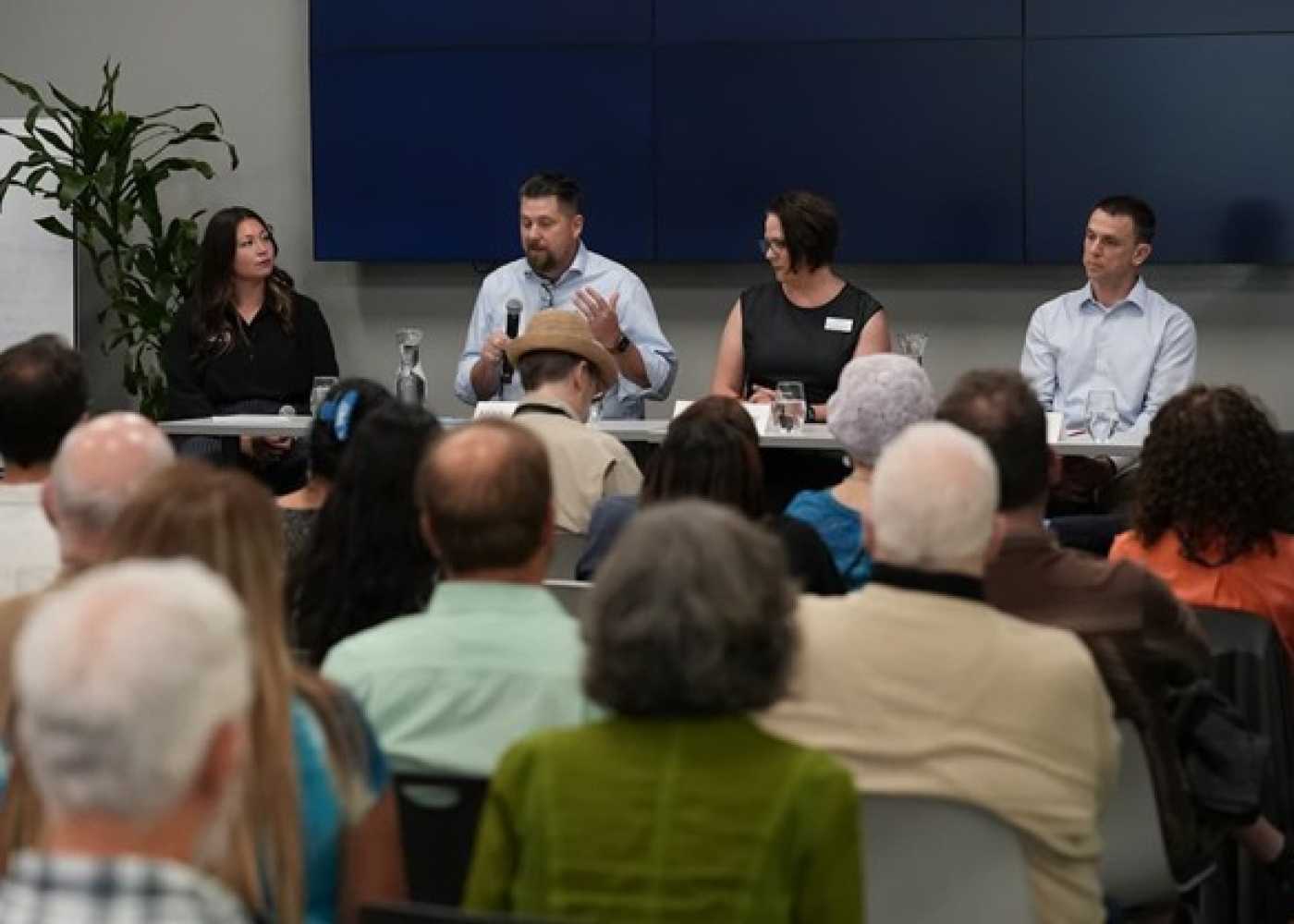
GeoZone Town Hall

Energy transitions are often talked about in terms of infrastructure, new technologies, and ambitious climate goals. But for the people living in the neighborhoods where these changes happen, the transition feels much more personal. It shows up in monthly energy bills, comfort at home, job opportunities, and the chance to have a voice in decisions that shape their future. Meaningful community engagement is not optional; it is essential to making energy transitions successful.

In Sonoma and Mendocino counties, this transition is taking shape through the GeoZone, an initiative led by Sonoma Clean Power (SCP) to develop up to 600 MW of geothermal energy. As a community-owned, not-for-profit power provider governed by a board of local elected officials, SCP answers directly to the people it serves. That accountability fundamentally shapes how the agency approaches engagement. The goal is not simply to secure permits, but to ensure projects reflect community priorities and help residents understand why energy choices matter. For example, regional outreach has helped build understanding of why solar alone cannot provide around-the-clock reliability, and why geothermal plays a critical role in a resilient clean energy system.

Image
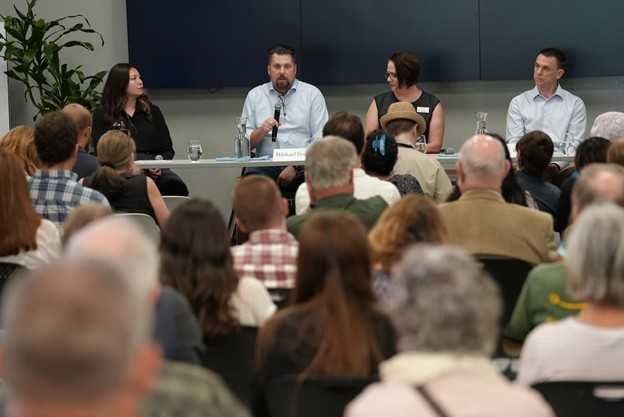
GeoZone Town Hall

Geothermal development offers long-term benefits for the region, including reliable clean power, local workforce opportunities, new tax revenue, and protection against rising energy costs. Keeping those benefits local is a core reason why SCP has entered the geothermal space. Achieving that outcome requires early and ongoing public involvement so communities can help guide how projects evolve. For many customers, engagement also starts with understanding who Sonoma Clean Power is and why its name appears on their electricity bill. 

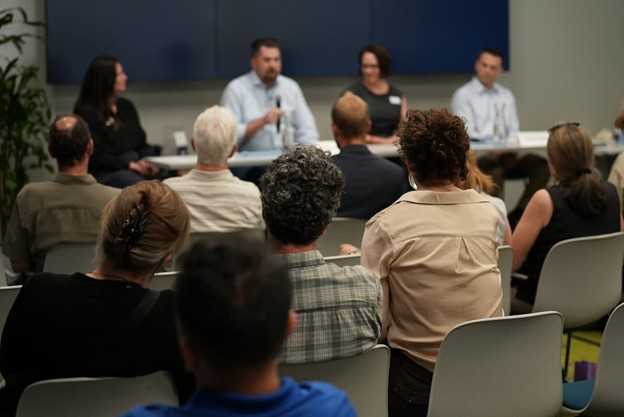
Public presentations and town halls have created space for transparency and dialogue with residents, local leaders, partners, and industry experts. Events in Santa Rosa, the largest city in SCP’s service area, and Cloverdale, near the GeoZone’s original interest area, drew strong participation and surfaced a range of perspectives and questions, from construction impacts to seismic monitoring. Beyond large public forums, SCP continues smaller, focused conversations with local organizations and community leaders, where consistent priorities have emerged: affordability, local jobs, and long-term reliability.

Image
GeoZone Town Hall

Community input has also helped shape SCP’s policy advocacy for responsible geothermal development. Two SCP-sponsored bills, AB 1359 and AB 531, have been signed into law, supporting more efficient and cost-effective development of new geothermal resources. Ongoing efforts focus on improving permitting, strengthening transmission planning, and lowering costs for customers. At the same time, SCP is working with technology developers, local agencies, and research partners to advance geothermal solutions that align technical innovation with community needs. 

As the GeoZone advances, it highlights a broader lesson for energy transitions everywhere: progress depends not only on technology, but also on trust, accountability, and collaboration. By grounding innovation in community priorities, policy alignment, and strong partnerships, Sonoma Clean Power aims to demonstrate how local solutions can build a more reliable, affordable, and resilient energy future. 

Image
GeoZone Town Hall
Engagement at the Center of Local Geothermal Progress
Authors
Melissa King

The Overlooked Variable in EGS Success

Submitted by bschmidt on Apr 13, 2026
  • Read more about The Overlooked Variable in EGS Success
Date
Apr 15, 2026
Geothermal Rising
Geothermal Community
Download PDF
Image
Logo for CARBO member article
The engineered reservoir is the real asset

Enhanced geothermal systems deliver firm, always-on power by turning hot, low-permeability rock into a controlled heat exchanger. Instead of tapping a rare natural hydrothermal reservoir, developers create permeability through stimulation, then circulate water through the engineered fracture network.

In that model, it is imperative that the system is built to last. The fractures and their ability to stay open and conductive become the heart of the asset. If the fracture network closes or degrades, the well’s productivity falls. If it remains open and conductive for decades, the same capital investment can support decades of baseload energy.

Quote
In an enhanced geothermal system, the rock gives you the heat, but the fractures deliver it to the plant and dictate how long you can use it.
Attribution
Terry Palisch, CARBO Chief Technology Officer

That is why the quality of the engineered reservoir “system” is an overlooked variable in EGS success. It determines not only how the well performs in the first few years, but also how it behaves over twenty or thirty years of thermal cycling and flow.

For CARBO, this is where the company’s role starts. CARBO positions itself not as a commodity supplier, but as a subsurface technology partner focused on the performance and longevity of the engineered reservoir.

Proppant extends the life of your well

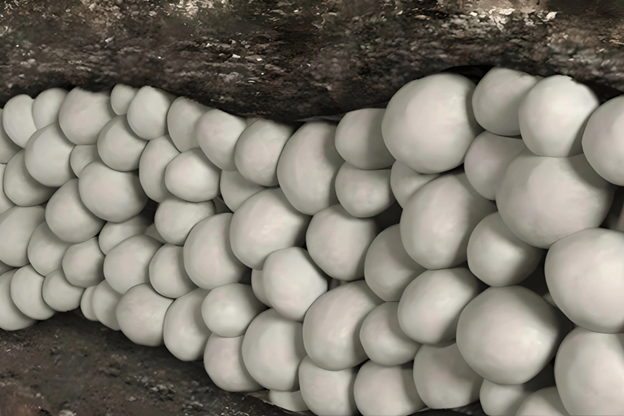
Within an EGS reservoir, proppant often looks like a detail. It is not as visible as the drilling rig or the stimulation pumps. Yet it plays a decisive role. Proppant grains keep fractures open once pressure is released. They are the skeleton and ultimately the backbone of the heat exchanger.

If the proppant crushes, dissolves, or migrates, fractures close, and effective flow paths can narrow or even cease to exist. That leads to higher pressure drop, lower flow rates, and a shrinking thermal sweep. In economic terms, it shortens the productive life of the well.

More importantly, in an EGS development, the propped fracture network is not just a subsurface detail. It is a direct extension of the power plant infrastructure. The efficiency and long-term output of the surface facility are fundamentally tied to the reservoir’s ability to deliver consistent, high-conductivity flow over time. If conductivity degrades, the plant does not operate at its design capacity. If it is preserved, the entire system, from reservoir to turbine, performs as intended for decades.

Image
Proppnts in an EGS well
Caption
In an enhanced geothermal system, propped fractures form an artificial heat exchanger that must stay open and conductive for decades.

Several factors make EGS more demanding than typical oil and gas environments:

  • Temperatures can reach 300°C or higher in some advanced EGS and superhot rock concepts.
  • Closure stresses can be high as the rock responds to stimulation and thermal cycling.
  • Geothermal brines can be chemically aggressive, with scaling and corrosion tendencies.

Conventional silica sand was never designed for that combination. Under high temperature and stress, sand will crush into fines, partially dissolve in hot fluids, or chemically react in ways that narrow or block flow paths. Research on proppant reactivity in EGS environments has highlighted that long-term fracture conductivity can decline sharply when proppant is mismatched to the reservoir conditions.

By contrast, high-performance ceramic proppants are engineered from the start for strength, thermal stability, and chemical resistance. CARBO’s geothermal line, for example, is built specifically for EGS and other extreme subsurface environments. Products like GEOPROP and GEOPROP MAX are designed to withstand high temperatures, high closure stresses, and aggressive brines while maintaining conductivity and mechanical integrity.

The core idea is simple: if proppant is the skeleton of the engineered heat exchanger, then proppant selection is a strategic design decision, not a line-item commodity.

Image
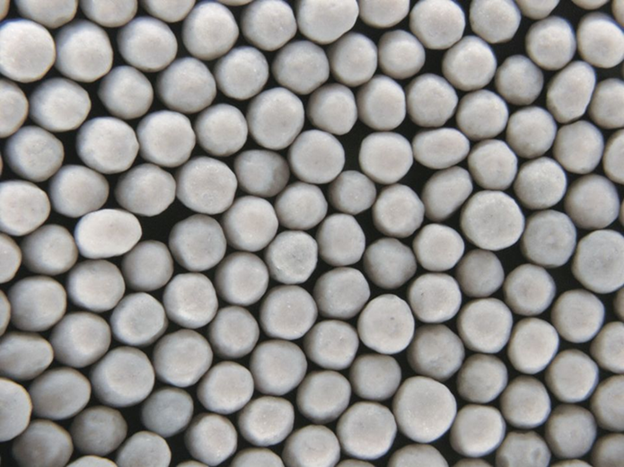
Proppants
Caption
Engineered ceramic proppant grains designed to maintain fracture conductivity in extreme geothermal conditions.
How can ceramic proppants improve EGS production?

Ceramic proppants bring several characteristics that are directly relevant to enhanced geothermal systems:

  • Strength under stress. Engineered ceramic grains are manufactured to high, consistent strength, so they resist crushing under elevated closure and thermal stress cycles.
  • Thermal stability. Ceramic proppants such as GEOPROPare fired at temperatures above 1500°C. That thermal history helps them retain structure and conductivity in geothermal reservoirs where formation temperatures can exceed 300°C.
  • Chemical durability. Ceramic compositions and patented pelletization techniques can be refined to resist dissolution and chemical attack in geothermal brines, reducing fines generation and preserving flow paths over time.
  • Optimized conductivity. Uniform grain size and shape help create higher-conductivity packs, reducing tortuosity and pressure drop across the fracture.

For geothermal developers, the economics of these properties are straightforward. EGS wells require high upfront capital for drilling and stimulation. Once that money is spent, there are only two ways to improve returns: increase the heat produced over the life of the project, or extend its productive life. Long-term fracture conductivity serves both goals.

Quote
The playbook for EGS borrows extensively from unconventional oil and gas, but the design philosophy has to come from offshore, where every decision is made with decades of reliable performance in mind.
Attribution
Dina Goloshchapova, CARBO Geothermal Champion

Ceramic proppants are designed to maintain that conductivity under conditions that would quickly degrade sand. 

In other words, proppant is directly tied to improving lifecycle economics. Getting it wrong can shorten the reservoir's life. Getting it right can protect the capital invested in the well and support truly infrastructure-grade geothermal assets.

De-risking EGS with U.S.-based manufacturing

Supply certainty is another, often overlooked, variable in geothermal project risk. EGS developments are capital-intensive and schedule-driven. Delays in critical materials can cascade into rig standby costs, missed grid connection windows, or contract penalties.

CARBO manufactures its ceramic proppant in the United States, building on a forty-five-year manufacturing base in high-quality advanced ceramics. That U.S. footprint provides several advantages for geothermal projects operating on tight timelines:

  • No exposure to overseas tariffs on core proppant volumes.
  • Shorter and more predictable logistics chains for North American projects.
  • The ability to coordinate delivery schedules with drilling and completion programs.

For developers, that supply-chain reliability translates into one less source of uncertainty. It also supports domestic content goals where they apply, which is relevant for projects seeking certain forms of U.S. federal support.

In a market where EGS wells are often drilled in frontier conditions and testing new designs, reducing supply-chain risk around critical materials helps keep attention on the subsurface learning curve, not on whether the next proppant shipment will arrive.

A forty-five-year track record in engineered subsurface performance

Since 1979, CARBO has built a global business around engineered ceramic solutions for demanding environments: high-pressure completions, complex unconventional reservoirs, industrial processes, and now geothermal.

Over more than four decades, CARBO has:

  • Pioneered high-strength ceramic proppants that became widely used in oil and gas for maximizing  EUR and return on investment.
  • Invested in research and development centers to characterize fracture conductivity, proppant transport, and long-term performance under stress.
  • Developed diagnostic and modeling tools that link proppant selection, fracture design, and economic outcomes in complex reservoirs.

In the geothermal space, that experience is now being applied to enhanced geothermal systems and superhot rock concepts, working with developers to design fracture systems that will remain conductive under the thermal, mechanical, and chemical realities of each project.

For Geothermal Rising’s member community, this kind of cross-sector transfer is part of the broader story of how subsurface expertise from oil and gas can accelerate the geothermal learning curve.

Looking ahead to infrastructure-grade geothermal

The geothermal sector is moving from pilots toward large-scale, infrastructure-grade deployment. EGS and related technologies are central to that transition, and as that shift happens, expectations around asset life and reliability will tighten. Power purchasers, regulators, and investors will question how long a deployment can sustain output. That question leads directly back to the engineered reservoir and to the materials that support it.

Ceramic proppants are not a silver bullet, but they are one part of an integrated EGS design that includes stimulation strategy, well architecture, and thermal management. They are part of what directly touches the “overlooked variable” this article began with: the quality and durability of the fracture network.

By combining advanced ceramic proppant technology, subsurface engineering expertise, and U.S.-based manufacturing, CARBO is uniquely positioned as a solutions-based partner for developers who want to de-risk EGS performance and protect the long-term value of their assets. For investors and operators betting heavily on infrastructure-grade geothermal, the focus on the longevity of the underground heat exchanger is a necessity.

Takeaway for the geothermal industry

For Geothermal Rising members, the main lesson is simple: in enhanced geothermal systems, fracture network quality is something you design. Proppant selection is a critical component in a successful development.

Treating proppant as a strategic choice rather than a commodity can:

  • Improve long-term fracture conductivity and connectivity in extreme temperature and stress environments.
  • Support better lifecycle economics by protecting early capital investments.
  • Reduce some of the operational and supply-chain risk associated with EGS development.
  • Reinforce power plant efficiency and long-term reliability by ensuring the reservoir consistently delivers the flow needed to sustain design capacity and revenue generation.

As enhanced geothermal systems scale up, the operators and developers will be judged not just on drilling deeper or hotter, but on building systems that last. Advanced ceramic proppants, applied thoughtfully and supported by subsurface expertise, are one tool that can help make that longevity real.

Member Focus: In enhanced geothermal systems, the reservoir is engineered to improve performance. That means performance is designed from the start. While much of the attention in EGS focuses on drilling and stimulation, the asset’s long-term life is largely governed by a quieter decision: how the fracture network is built and propped. This article explores why fracture conductivity is the heart of an EGS well, how advanced ceramic proppants can help protect that conductivity in extreme environments, and how CARBO is applying more than forty-five years of subsurface experience and U.S.-based manufacturing to support infrastructure-grade geothermal projects.

Keeping Tools Cool to Reach Hotter Geothermal Wells

Submitted by bschmidt on Mar 19, 2026
  • Read more about Keeping Tools Cool to Reach Hotter Geothermal Wells
Date
Mar 18, 2026
Geothermal Community
Geothermal Rising
Image
NOV blog graphic
When Temperature Becomes the Real Drilling Limit

Most BHA components in high-temperature wells are designed for a maximum operating temperature around 149°C (300°F). In contrast, formation temperatures in some shale and geothermal wells already exceed 177°C (350°F). As the circulation loop runs, the relatively cool mud that is pumped down the drillpipe absorbs heat from the hot rock around the wellbore. At the bit, the mud turns and returns toward the surface in the annulus as hotter circulating mud. Because the well is drilled overbalanced, native formation fluids stay in the rock, and it is the drilling mud that picks up and carries the heat. By the time mud reaches the bottom hole assembly, its temperature is much closer to the formation temperature, which is the temperature the tools actually have to withstand.

Elevated temperatures do more than stress electronics. They accelerate corrosion, erosion, and fatigue in steels and elastomers and degrade mud rheology, thinning the fluid and reducing its ability to clean the hole. The result is familiar to drilling engineers: more unplanned trips, more tool failures, and more non-productive time.

Whether the well is chasing gas in the Eagle Ford or heat in a geothermal project, the central question is the same. How do we keep the circulating system cool enough for the tools to survive, without sacrificing performance?

Quote
Temperature becomes the silent failure driver long before the rock wins. If we can manage the heat, the rest of the drilling system can do its job.
Attribution
Michael Adams, Director of Corrosion Control Technical Support at NOV Tuboscope
Turning Drillpipe into a Thermal Shield

NOV’s Tuboscope business unit has spent decades developing internal coatings that extend tubular life by resisting corrosion, wear, and deposit buildup while maintaining hydraulic efficiency. As operators in oil and gas and geothermal began seeking a coating that could also serve as a thermal barrier, the research team focused on one key property: thermal conductivity.

Image
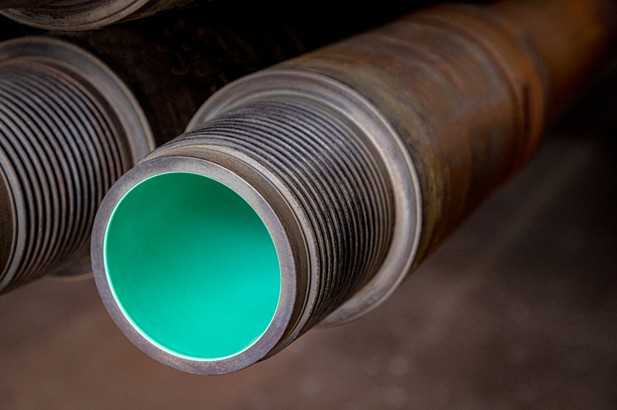
TK Drakōn coated drillpipe
Caption
Close interior view of TK Drakōn coated drillpipe, showing a glossy green inner surface, a threaded connection in the foreground, and the pipe body receding into the background to suggest depth.

Carbon steel drillpipe has a thermal conductivity of roughly 45 W/m·K, so it readily conducts heat from hot rock and annular fluids into the cooler mud inside the pipe. Legacy internal coatings improved corrosion resistance but did relatively little to slow heat flow.

Using a heat flow meter, NOV tested candidate coatings across a wide temperature range. 

Earlier coatings averaged about 0.84 W/m²K. Through multiple iterations, the team developed TK Drakōn with an average thermal conductivity of 0.162 watts per meter Kelvin, more than five times lower than that of previous coatings and nearly 280 times lower than that of steel. The inside of the pipe becomes a significantly cooler pathway for drilling fluid.

TK Drakōn was also subjected to high temperature, high-pressure exposure, immersion in corrosive solutions, and physical tests for abrasion, impact, and flexibility. The coating is applied in a thin 20 to 30 mil (0.5 to 0.75 millimeter) layer that preserves a smooth internal surface, supports efficient flow, and limits the buildup of scale and solids.

With more than 1.0 million feet (about 305,000 meters) of TK Drakōn-coated pipe in service, the coating has moved from concept to a standard option for high-temperature drilling. For geothermal developers, it offers a qualified way to manage heat along the drillstring while also protecting tubulars from aggressive brines.

Two-Stage Mud Chilling in the Field

Managing temperature inside the well starts at the surface. Once hot mud returns from the hole, it passes through shakers and solids-control equipment, then becomes a candidate for cooling before being pumped back downhole. 

Conventional mud cooling often relies on evaporative or air-based systems that struggle in hot, humid environments and may require large volumes of water. Chillers use a closed refrigeration loop to remove heat from the fluid and can maintain precise temperature control without external water.

NOV’s Tundra Max mud chiller combines air cooling and chiller technologies in a two-stage, closed-loop package. In the first stage, an air cooling unit removes heat from the drilling fluid by transferring it into a circulating water loop. In the second stage, a refrigeration unit removes additional heat from the same water loop, allowing it to continue pulling heat from the mud. Both stages use plate and frame heat exchangers in a counter-flow configuration, where the drilling fluid flows in one direction, and the cooling water flows in the other, which increases contact and improves heat transfer from the hot drilling fluid to the cooling medium.

The trailer-mounted unit can handle oil-based, synthetic-based, and water-based muds. In the first stage, an air-cooling unit removes heat from the water loop. In the second stage, a refrigeration unit chills that loop further. Both stages use plate-and-frame heat exchangers in a counterflow configuration to transfer heat between the mud and the cooling medium.

At the rig site, Tundra Max draws relatively clean fluid from the suction tank, chills it, and returns it to the solids control tank, typically the hottest point in the surface system. The result is a continuous heat sink that pulls the overall system temperature downward before the mud is pumped back into the well.

In long, high-temperature laterals in South Texas, this integrated approach delivered measurable gains. In one case study, Tundra Max lowered the active mud temperature at the surface by an average of 29.5°C, from 61.7°C at the inlet to 32.2°C at the outlet. With the mud chiller alone, the bottom hole temperatures were reduced to about 186°C, even though the undisturbed formation temperature was close to 196°C. When the chiller was combined with TK Drakōn-coated drillpipe, the bottom-hole circulating temperatures in the wellbore dropped further to an average of 159°C. That additional margin improved the operating environment for downhole electronics and elastomers and reduced heat-related risks for personnel at the surface.

Image
Wide shot of the Tundra Max skid and trailer beside a drilling rig, with visible hoses connected to the mud system, fans or heat exchangers clearly in view, and workers in standard PPE to convey scale and real-world deployment.
Caption
Wide shot of the Tundra Max skid and trailer beside a drilling rig, with visible hoses connected to the mud system, fans or heat exchangers clearly in view, and workers in standard PPE to convey scale and real-world deployment.
From HPHT Lessons to Superhot Geothermal

As lateral lengths approach 8 kilometers and geothermal concepts push toward supercritical and superhot conditions, drilling will increasingly be limited by the tools that can tolerate them, not just by rock mechanics. Temperature in the circulation system is something operators can actively design around.

For geothermal projects, whether conventional hydrothermal, enhanced geothermal systems, closed-loop designs, or superhot pilots, the path is similar. Assume active temperature management from the earliest phases of well design. Pair downhole insulation, such as TK Drakōn, with surface cooling, such as Tundra Max, as standard practice in high temperature campaigns. Use early wells in a field to tune bit selection, trajectory, hydraulics, and the thermal profile of the circulation system.

NOV is already extending its coating and cooling expertise into geothermal projects. These cross-sector lessons are relevant to a community experimenting with new well architectures and resource types while still relying on many of the same drilling fundamentals.

Takeaway for the Geothermal Community

The story behind TK Drakōn and Tundra Max is less about individual products and more about a systems approach to heat. By reducing heat transfer into the drilling fluid and removing heat at the surface, NOV’s integrated system keeps BHAs operating closer to their rated lifespans, reduces non-productive time due to temperature-driven failures, stabilizes mud properties, and improves rig safety. Across multi-well campaigns, those gains compound and drive down cost per meter drilled.

As a participant in the Geothermal Rising community, NOV brings high-temperature drilling experience and a coatings and fluids portfolio that can be adapted for geothermal. In an industry-driven organisation that exists to connect subsurface innovators, this kind of technology transfer supports a shared goal: making clean, always on geothermal energy a practical choice in more places around the world.

Quote
As a community, we have to treat temperature as something we can engineer around. If we can keep tools in their comfort zone, we can go after much hotter rock with the hardware we already have.
Attribution
Michael Adams, Director of Corrosion Control Technical Support at NOV Tuboscope
Member Focus: As geothermal developers drill deeper into hotter rock, temperature, not rock strength, becomes the limiting factor. Downhole motors, sensors, and elastomers are typically rated to about 149°C (300°F), while formations can easily exceed 177°C (350°F). NOV has developed an integrated thermal management approach that couples TK Drakōn, a low-thermal-conductivity internal drillpipe coating, with the Tundra Max two-stage mud chiller. Proven in long, high-temperature wells in South Texas, this combination keeps drilling fluids cooler, extends bottom-hole assembly (BHA) service life, and reduces non-productive time (NPT), offering a practical path to drilling farther into high-enthalpy resources.

Pagination

  • Page 1
  • Next page ››
Subscribe to Geothermal Community

Stay Connected

Image
New Logo

Contact Menu

  • 530.758.2360
  • info@geothermal.org
  • Twitter
  • Youtube
  • LinkedIn

Footer menu

  • Member Login
  • Our Impact
  • Our Organization
  • Privacy Policy
  • Resources

©2026 Geothermal Rising